Pavel Banya, Bulgaria – Mineral Springs and Spa Heritage
Location: Pavel Banya, Stara Zagora Province, Bulgaria
Type: Spa Town / Mineral Springs / Balneology / Cultural Heritage
Main Facts:
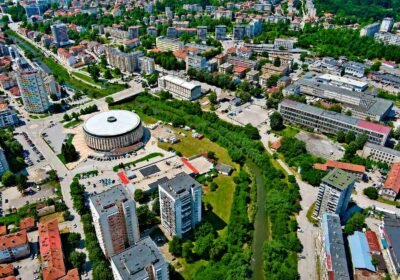
Pavel Banya is one of Bulgaria’s best-known spa destinations, situated in the heart of the Rose Valley between the Balkan Mountains and Sredna Gora. The town is famous for its hot mineral springs, spa hotels and rehabilitation facilities.
The area has seven principal mineral springs, with source temperatures generally reaching around 50–61°C. Their water is weakly mineralised and contains bicarbonate, sodium and fluoride ions, together with other dissolved substances.
Pavel Banya has developed a strong reputation for balneology, particularly for rehabilitation programmes involving the musculoskeletal system and peripheral nervous system. Today, the town combines traditional mineral-water treatments with modern spa facilities and wellness centres.
However, Pavel Banya offers more than relaxation. Its location makes it an excellent base for exploring the Rose Valley, the Thracian tombs around Kazanlak, traditional villages and the surrounding mountain landscapes.
History of Pavel Banya:
Although the modern town was established shortly after Bulgaria’s Liberation in 1878, the surrounding area has a much older history.
Archaeological discoveries near the mineral springs include remains of an ancient settlement, Roman baths and early Christian religious buildings. These findings indicate that people used the thermal waters long before the present town developed.
During the Ottoman period, local people continued to use the springs for bathing and traditional treatments. However, organised spa development began much later.
The modern settlement grew around the mineral springs after Liberation. It was named Pavel Banya in honour of Pavel Popovich, an important local figure associated with the town’s early development.
Over the following decades, mineral-water facilities were constructed and expanded. The development of public baths and rehabilitation centres gradually transformed Pavel Banya into an established Bulgarian spa resort.
Today, the town’s identity remains closely connected with its thermal waters and the tradition of balneology.
Pavel Banya’s Mineral Springs:
Mineral water is the main reason visitors travel to Pavel Banya. The town stands above a significant thermal-water deposit that has supported bathing and therapeutic treatments for generations.
The Ministry of Tourism identifies seven principal springs in the Pavel Banya deposit. Their temperatures vary, with the thermal water reaching approximately 61°C at the source.
The water is generally weakly mineralised, with a reported total mineralisation of around 0.62 g/l. Its composition includes bicarbonate, sodium and fluoride ions, together with metasilicic acid. The official spa description also records radon and hydrogen sulphide among the associated gases.
These characteristics distinguish Pavel Banya from destinations where mineral water has a much higher salt content.
Temperature and Mineral Composition
The temperature of Pavel Banya’s mineral water makes it particularly suitable for use in specialised bathing facilities after appropriate cooling.
Water emerging at around 50–61°C is too hot for comfortable bathing without temperature control. Spa centres therefore manage the water according to the requirements of their pools and treatments.
The water’s chemical composition also influences how local balneotherapy facilities use it. However, mineral waters differ between sources, and visitors should not assume that every spring has identical properties.
Balneotherapy and Rehabilitation
Pavel Banya is particularly known for its rehabilitation facilities.
Many spa centres offer programmes involving mineral-water baths, physiotherapy and other supervised treatments. These services are especially associated with rehabilitation following orthopaedic injuries and conditions affecting the joints, spine and peripheral nervous system.
The town’s long-standing focus on rehabilitation distinguishes it from destinations that concentrate mainly on luxury spa hotels and leisure pools.
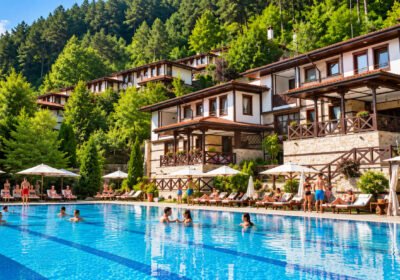
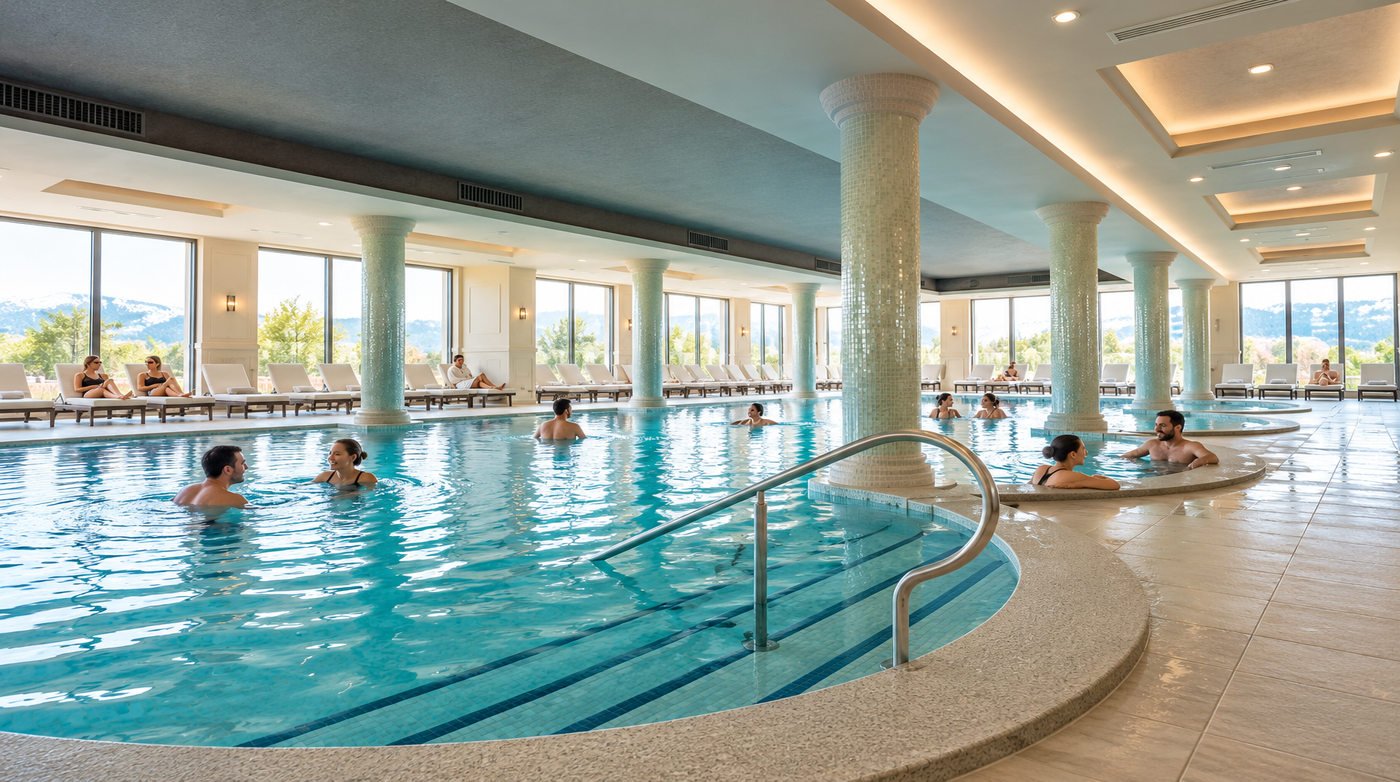
Nevertheless, visitors do not need to book a treatment to enjoy a relaxing stay. Many hotels offer mineral-water pools, wellness facilities and other services for general relaxation.
Anyone seeking medical treatment should consult a qualified professional and use appropriately supervised facilities.
Mineral Water and Modern Spa Hotels
Modern spa hotels have helped make Pavel Banya a popular destination for weekend breaks and longer wellness holidays.
Visitors can choose from thermal pools, indoor and outdoor swimming facilities, saunas, massage services and organised spa programmes.
The town’s relatively compact layout also makes it convenient for visitors who want to combine a spa stay with walks, local sightseeing and trips around the Rose Valley.
The Town Centre and Local Landmarks:
Pavel Banya is not a large historic city, but it has several small landmarks worth seeing between spa sessions.
Monument to Todor Mazarov
Todor Mazarov was a Bulgarian opera singer born in Pavel Banya in 1905. His powerful tenor voice brought him international recognition, including a successful career at the Vienna State Opera.
A monument in the town honours his contribution to Bulgarian music and his international achievements.
Monument to Tsanko Minkov Komitata
Tsanko Minkov Komitata was a member of Hristo Botev’s revolutionary detachment in 1876 and survived the fighting.
A monument in Pavel Banya commemorates his life and connection with Bulgaria’s struggle for national liberation.
The Briasta Woodcarving
The Briasta is another local landmark associated with traditional woodcarving.
It reflects the region’s connection with Bulgarian craftsmanship and provides an additional point of interest when exploring the town centre.
Church of the Holy Virgin
The Church of the Holy Virgin is one of the town’s religious landmarks.
The church reflects the Orthodox traditions of the local community and provides a quieter cultural stop beyond the spa facilities.
As an active place of worship, visitors should dress respectfully and avoid disturbing services.
Rose Valley and the Local Rose-Growing Tradition:
Pavel Banya lies in the famous Rose Valley, an area closely associated with Bulgarian oil-bearing roses and the production of rose oil.
During late spring and early summer, rose fields become an important part of the regional landscape. The harvest also brings traditional activities connected with rose picking and distillation.
The area around Pavel Banya is particularly convenient for exploring this heritage because several rose distilleries and ethnographic attractions lie nearby.
One of the best-known is the Damascena Ethnographic Complex in Skobelevo. Visitors can learn about traditional rose-oil production, explore a collection of historical household objects and see how the distillation process has developed over time.
This makes Pavel Banya an interesting destination even for travellers who are not primarily interested in spa treatments.
Nearby Traditional Villages:
Several villages within Pavel Banya Municipality offer additional cultural attractions.
Turia
Turia is closely connected with the Bulgarian writer and caricaturist Chudomir, whose real name was Dimitar Chorbadzhiyski.
His restored birth house operates as a museum, while the permanent exhibition called Nashentsi introduces visitors to local culture and traditions.
The village is a good choice for anyone interested in Bulgarian literature, humour and rural heritage.
Gabarevo
Gabarevo contains historic houses associated with Bulgaria’s national liberation movement.
The Dzhanao House is connected with the revolutionary activity of Vasil Levski, who established a local revolutionary committee in the village in 1869.
Another historic property is the Radouchev House, associated with a supporter of Levski.
These buildings provide a different perspective on the region’s history and are worth considering during a wider cultural tour.
Skobelevo and the Damascena Complex
Skobelevo is home to the Damascena Ethnographic Complex, a family-run rose-oil distillery.
The complex combines traditional and modern distillation facilities with a rose garden, historical displays and a collection of objects linked with rural life.
Visitors can learn how rose oil is produced and discover why the Rose Valley became internationally famous for this industry.
Koprinka Dam and Seuthopolis:
Koprinka Dam lies close to Pavel Banya and provides opportunities for relaxation, fishing and enjoying the surrounding landscape.
However, the area is also important for ancient history. The reservoir covers the remains of Seuthopolis, the city founded by the Thracian ruler Seuthes III in the late 4th century BC.
Before the reservoir was created, archaeologists excavated substantial parts of the ancient city. The discoveries revealed streets, houses, fortifications and public buildings.
Today, Seuthopolis lies underwater, but its royal necropolis survives around the Kazanlak area. These archaeological sites form part of the wider Valley of the Thracian Kings.
Consequently, Pavel Banya is well placed for combining a relaxing spa stay with one of Bulgaria’s most important archaeological landscapes.
What to See:
• Mineral springs and spa facilities in Pavel Banya
• Monument to Todor Mazarov
• Monument to Tsanko Minkov Komitata
• Briasta woodcarving landmark
• Church of the Holy Virgin
• Dzhanao House Museum in Gabarevo
• Radouchev House in Gabarevo
• Chudomir Birth House Museum in Turia
• Nashentsi Ethnographic Exhibition
• Damascena Ethnographic Complex in Skobelevo
• Koprinka Dam
• Archaeological remains of the ancient city of Seuthopolis, now submerged beneath the reservoir
Best Time to Visit:
Pavel Banya can be enjoyed throughout the year.
Spring is an excellent time to explore the surrounding countryside and visit nearby villages. By late May and early June, the Rose Valley becomes particularly attractive as the roses bloom and harvesting activities begin.
Summer is ideal for combining spa facilities with outdoor activities and visits to nearby archaeological sites. However, early mornings and late afternoons are more comfortable for sightseeing during hot weather.
Autumn offers a quieter atmosphere and pleasant conditions for exploring the surrounding region.
Winter is particularly suitable for a relaxing spa break. Warm mineral-water pools provide an inviting contrast to the colder weather.
For visitors interested in both wellness and local culture, late spring and early autumn are especially good choices.
What to Visit Nearby:
• Kazanlak – Rose Museum and Historical Museum Iskra
• Thracian Tomb of Kazanlak – UNESCO World Heritage Site
• Valley of the Thracian Kings
• Golyama Kosmatka Tomb
• Shipka Monument
• Shipka Memorial Church
• Buzludzha Monument
• Damascena Ethnographic Complex
• Koprinka Dam
• Central Balkan National Park
Quick Travel Information:
Pavel Banya is approximately 180 km from Sofia, with a driving time of around 2 hours and 30 minutes. From Veliko Tarnovo, the journey is roughly 100 km and takes about 1 hour and 40 minutes by car.
Its location makes Pavel Banya a practical day trip from Veliko Tarnovo, particularly when combined with Kazanlak and the Valley of the Thracian Kings. However, visitors planning to enjoy the mineral pools and treatments may prefer an overnight stay.
Allow at least 2–3 hours for the town and its spa facilities, or longer if you plan to book treatments.
For a fuller itinerary, combine Pavel Banya with the Rose Valley, Damascena Ethnographic Complex or the nearby Thracian tombs around Kazanlak.
Useful Links:
• Google Maps – Pavel Banya, Bulgaria
• Official Website – Pavel Banya Municipality
• Official Website – Damascena Ethnographic Complex
• Tourist Information – Bulgaria Travel
• Weather Forecast – Pavel Banya