Valley of the Thracian Kings – Bulgaria’s Ancient Royal Tombs
Location: Kazanlak Valley, Stara Zagora Province, Bulgaria
Type: Thracian Archaeological Heritage / Ancient Tombs / Cultural Landscape
Main Facts:
The Valley of the Thracian Kings is one of Bulgaria’s most important archaeological areas. It lies around Kazanlak, between the Balkan Mountains and Sredna Gora, and contains numerous Thracian tombs, temples and burial mounds.
The area became famous for the remarkable tombs discovered around Kazanlak and Shipka. Many date from the 5th to 3rd centuries BC and were built for Thracian rulers and members of the aristocracy.
The most famous monument is the Thracian Tomb of Kazanlak, which is a UNESCO World Heritage Site. Other important monuments include Golyama Kosmatka, Shushmanets, Ostrusha, Helvetia and the Griffins.
Several of these tombs form part of a proposed UNESCO serial extension known as the Royal Necropolis of the Thracian City of Seuthopolis. However, this extension remains on UNESCO’s Tentative List, rather than the World Heritage List.
The valley also lies within Bulgaria’s famous Rose Valley. Consequently, visitors can combine Thracian archaeology with the rose-growing traditions of Kazanlak.
History of the Valley:
The Thracians established important political and religious centres in the region during antiquity. One of the most significant was Seuthopolis, the capital founded by the Odrysian king Seuthes III during the late 4th century BC.
Seuthopolis stood near present-day Koprinka Dam. Although the ancient city is now submerged beneath the reservoir, its surrounding royal necropolis remains one of the most important archaeological areas in the valley.
During the 20th century, archaeologists uncovered a remarkable group of monumental tombs. Particularly important discoveries were made in the 1990s and early 2000s during extensive archaeological research in the Kazanlak area.
The discoveries revealed elaborate stone architecture, burial chambers, ceremonial spaces, precious objects and evidence of Thracian religious practices.
Today, the concentration of monuments around Kazanlak and Shipka allows visitors to explore several different examples of Thracian funerary architecture within a relatively small area.
The Thracian Tomb of Kazanlak:
The Thracian Tomb of Kazanlak is the best-known monument in the valley.
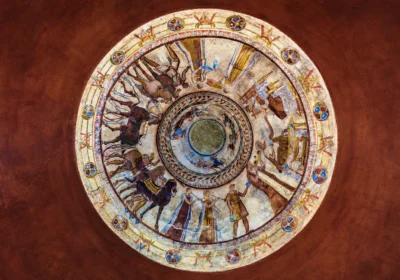
Discovered in 1944, the tomb dates from the Hellenistic period, around the end of the 4th century BC. Its narrow corridor and circular burial chamber are decorated with remarkably preserved frescoes showing a funeral ceremony and other scenes connected with Thracian culture.
The paintings are considered one of the outstanding achievements of Hellenistic funerary art.
Because the original tomb is highly sensitive, visitors normally enter a precise replica beside the protected monument. The replica allows people to see the architecture and famous paintings without exposing the original frescoes to unnecessary damage.
The tomb was added to the UNESCO World Heritage List in 1979.
Golyama Kosmatka Tomb:
Golyama Kosmatka is one of the most impressive tombs in the Valley of the Thracian Kings.
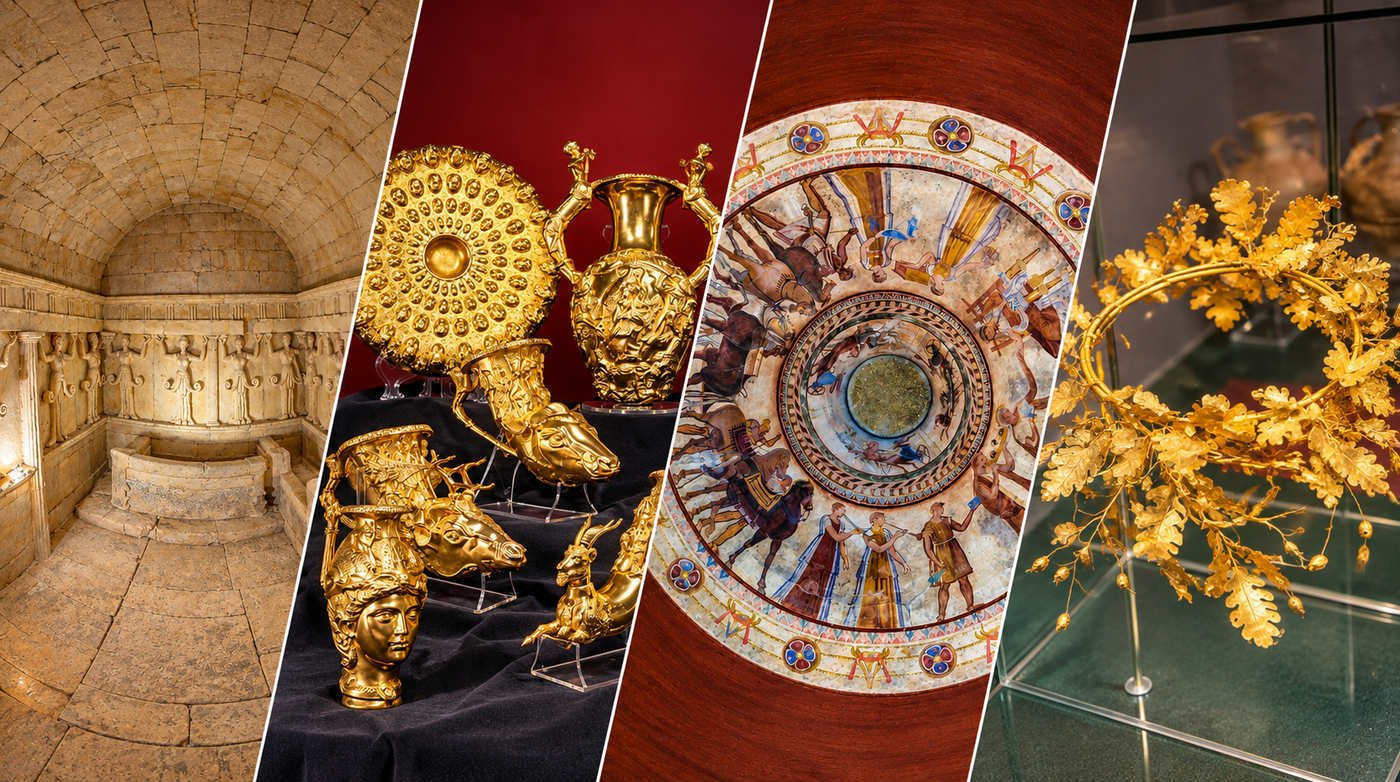
Located near Shipka, the monumental complex contains several chambers and a long entrance corridor. Archaeologists discovered an exceptionally rich collection of objects, including a golden crown, a golden cup, weapons, horse equipment and other valuable burial gifts.
A bronze head of a Thracian ruler was also found outside the tomb. Several objects carried the name of Seuthes, while the bronze head resembles representations of Seuthes III on coins.
For these reasons, archaeologist Georgi Kitov proposed that the tomb belonged to Seuthes III. The identification is widely associated with the monument, although archaeological interpretation remains important when discussing the evidence.
Today, Golyama Kosmatka is one of the main visitable Thracian monuments in the area.
Shushmanets Tomb:
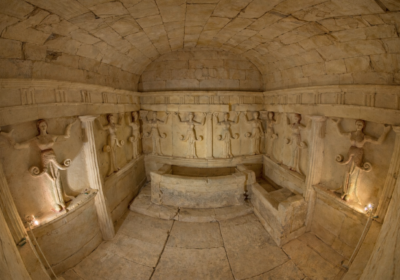
The Shushmanets mound contains one of the most unusual Thracian temples in the valley.
Built in the 4th century BC, the monument has a passage, an antechamber and a circular burial chamber with a domed ceiling.
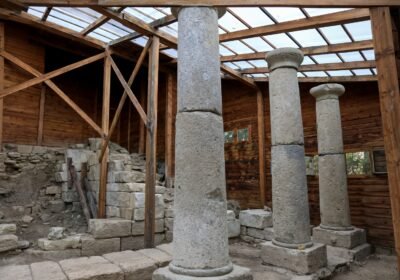
A central Doric column rises inside the chamber, surrounded by additional columns and architectural details. This combination gives the tomb a particularly impressive appearance.
Evidence of animal sacrifice was also discovered in the complex, including remains of four horses and two dogs.
Shushmanets is about 2 km east of Shipka and is open to visitors with guided tours.
Ostrusha Tomb:
The Ostrusha mound near Shipka contains a large cult-funerary complex built in the 4th century BC.
One of its most remarkable features is the ceiling of the main chamber. The stone ceiling is divided into many decorative sections containing portraits, human figures, animals, plants and geometric designs.
A central circular element was covered with gold and represented a sun disk.
Although the tomb was robbed in antiquity, important remains survived. Today, a protective structure helps preserve the monument while allowing visitors to see its architecture and surviving decoration.
Helvetia and the Griffins:
Two other important monuments stand close to Shushmanets.
The Helvetia Tomb contains a rectangular burial chamber, antechamber and long passage. Its walls preserve traces of fine decorative plaster, while evidence of horse sacrifice was found in the complex.
Nearby, the Griffins Tomb takes its name from decorative elements resembling griffin heads. It contains a circular burial chamber with a beehive-shaped dome and a decorated entrance.
Both monuments demonstrate the variety of architectural solutions used by Thracian builders during the 4th century BC. They also form part of the proposed royal necropolis extension on UNESCO’s Tentative List.
Other Thracian Tombs in the Valley:
The archaeological landscape extends beyond the best-known monuments.
Golyama Arsenalka is another monumental tomb near the village of Sheinovo. Its burial chamber contains a distinctive stone floor design featuring a circular solar symbol.
Svetitsa mound is famous for a spectacular gold mask found in a stone burial. The mask has become one of the best-known objects associated with Thracian archaeology in Bulgaria.
The Sarafova mound, also known as Kran 2, contains another masonry tomb. Unlike the better-known monuments, access to this tomb is restricted to specialists.
Together, these discoveries show that the Valley of the Thracian Kings was not simply a collection of isolated tombs. Instead, it formed a large funerary landscape connected with the political centre of Seuthopolis.
Historical Importance:
The Valley of the Thracian Kings provides an exceptional insight into Thracian society.
The monumental tombs demonstrate the resources and technical skills available to the Thracian elite. Large stone blocks, carefully planned chambers, decorated entrances and sophisticated domes required considerable organisation and craftsmanship.
The burial objects also reveal the wealth and status of the people buried here. Gold jewellery, weapons, horse equipment, vessels and ceremonial objects were placed in several tombs.
At the same time, the architecture offers clues about Thracian religious beliefs. The repeated use of circular chambers, solar symbols, ritual spaces and burial offerings reflects a complex understanding of death and the afterlife.
The connection with Seuthopolis makes the area even more significant. The tombs belonged to a broader landscape surrounding an important Thracian political centre.
What to See:
• Thracian Tomb of Kazanlak – UNESCO World Heritage Site
• Golyama Kosmatka Tomb – associated with Seuthes III
• Shushmanets Tomb
• Ostrusha Tomb
• Helvetia Tomb
• Griffins Tomb
• Golyama Arsenalka Tomb
• Svetitsa Mound and its famous gold mask
• Replica of the Kazanlak Tomb
• Historical Museum Iskra in Kazanlak
• Rose Museum in Kazanlak
Best Time to Visit:
The Valley of the Thracian Kings can be explored throughout the year.
Spring and autumn are particularly comfortable for visiting several archaeological sites in one day. During summer, early morning is preferable for walking between outdoor attractions.
The Rose Valley adds another seasonal attraction in late spring and early summer. In particular, the annual Rose Festival in Kazanlak usually takes place around the beginning of June.
Allow enough time for both the tombs and the museums in Kazanlak. A full day is ideal if you want to combine several Thracian sites with Shipka.
What to Visit Nearby:
• Shipka Monument – Bulgaria’s famous memorial on Shipka Peak
• Shipka Memorial Church
• Kazanlak Rose Museum
• Historical Museum Iskra
• Rose Valley
• Seuthopolis archaeological area and Koprinka Dam
• Starosel Thracian Cult Complex
• Pavel Banya
• Buzludzha Monument
Quick Travel Information:
Kazanlak is approximately 100 km from Veliko Tarnovo, with a driving time of around 1 hour and 40 minutes. Therefore, the Valley of the Thracian Kings works very well as a full-day historical trip from Veliko Tarnovo.
Kazanlak is around 195–230 km from Sofia, depending on the route, with a typical driving time of approximately 2 hours and 45 minutes. The area can therefore also be visited as a day trip from the capital.
For the best experience, plan a route that includes Kazanlak, Shipka and several of the nearby tombs. Golyama Kosmatka, Shushmanets and Ostrusha are among the monuments currently prepared for visitors.
Allow a full day if you want to see several tombs and visit the museums in Kazanlak. Comfortable shoes are recommended, as the itinerary involves walking between archaeological sites.
Useful Links:
• Google Maps – Valley of the Thracian Kings
• UNESCO World Heritage Centre – Thracian Tomb of Kazanlak
• Official Website – Historical Museum Iskra, Kazanlak
• Weather Forecast – Kazanlak