Golyama Kosmatka Tomb – Bulgaria’s Remarkable Thracian Royal Tomb
Location: Near Kazanlak, Central Bulgaria
Type: Ancient Thracian Tomb / Archaeological Site / Historical Landmark
Main Facts:
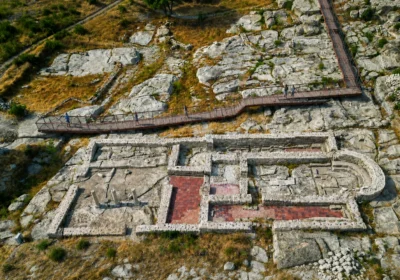
Golyama Kosmatka Tomb is one of the most important Thracian sites in Bulgaria. It stands near Kazanlak in the famous Valley of the Thracian Kings. Many visitors come here to explore Bulgaria’s ancient past.
Archaeologist Georgi Kitov discovered the tomb in 2004. Historians believe it served as the burial place of King Seuthes III. He ruled the Odrysian Kingdom during the 4th century BC.
Today, experts regard the site as one of the finest examples of Thracian burial architecture. Ancient builders constructed the complex beneath a large burial mound. In addition, they created a long stone corridor, several chambers, and a monumental entrance.
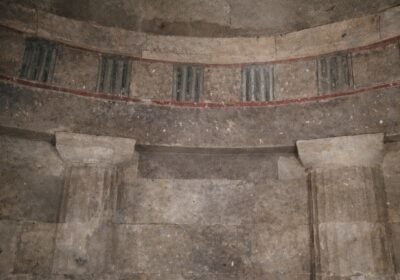
Furthermore, the complex contains a circular granite burial chamber. Therefore, visitors can see the advanced engineering skills of the ancient Thracians.
The structure reflects both the wealth and power of Thracian rulers. Moreover, it highlights the importance of royal burial traditions in ancient Bulgaria.
Discoveries at Golyama Kosmatka Tomb:
The tomb became famous after archaeologists uncovered valuable treasures inside the burial complex. For example, they found golden ornaments, silver vessels, weapons, armour, horse equipment, and ritual objects.
As a result, researchers gained valuable information about Thracian culture and religion. In addition, these discoveries increased international interest in the site.
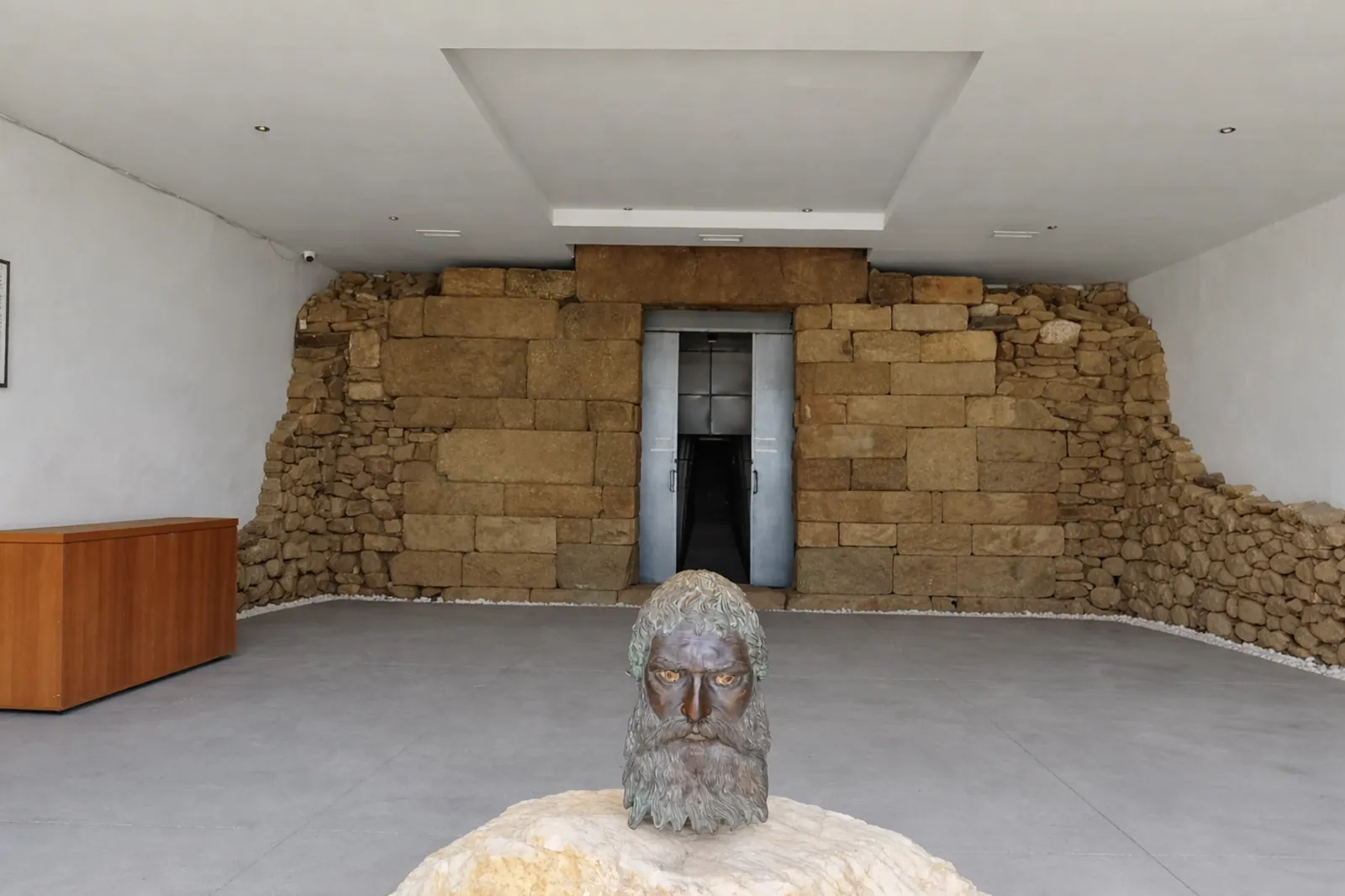
One of the most remarkable finds was a bronze head believed to represent King Seuthes III. Today, experts consider it one of the finest examples of Thracian sculpture discovered in Bulgaria.
Archaeologists also found evidence that ancient people sealed the entrance after the ruler’s burial. Consequently, researchers learned more about Thracian beliefs concerning royal power and the afterlife.
Today, Golyama Kosmatka Tomb remains one of the leading archaeological attractions in central Bulgaria. Furthermore, it forms an important part of the Valley of the Thracian Kings tourism route.
Historical Importance:
Golyama Kosmatka Tomb provides valuable insight into ancient Thracian culture. Moreover, it is closely linked to King Seuthes III, the founder of the ancient city of Seuthopolis.
The discoveries inside the tomb revealed important details about craftsmanship, religion, military traditions, and burial customs. In addition, the architecture combines Thracian and Greek influences.
As a result, historians gained a better understanding of life in ancient southeastern Europe. Furthermore, the tomb helped researchers learn more about the Thracian elite and their traditions.
The discovery of the bronze head of Seuthes III became one of the most important archaeological finds in modern Bulgarian history. Consequently, international interest in Thracian archaeology increased significantly.
Today, Golyama Kosmatka Tomb remains one of Bulgaria’s most valuable archaeological treasures. At the same time, it continues to promote Bulgaria’s ancient heritage and cultural tourism.
What to See:
- Thracian Royal Burial Chambers
- Monumental Stone Corridor
- Circular Granite Burial Chamber
- Bronze Head of Seuthes III
- Ancient Thracian Architecture
- Archaeological Artefacts
- Valley of the Thracian Kings
- Burial Mound Landscape
Best Time to Visit:
The best time to visit Golyama Kosmatka Tomb is during spring and early summer. During these months, central Bulgaria becomes especially beautiful. In addition, the weather is ideal for sightseeing and archaeological tours.
What to Visit Nearby:
- Kazanlak
- Thracian Tomb of Kazanlak
- Ostrusha Thracian Tomb
- Shushmanets Thracian Tomb
- Valley of the Thracian Kings
- Shipka Monument
- Buzludzha Monument
- Rose Valley
Quick Travel Information:
Golyama Kosmatka Tomb is located about 12 kilometres north of Kazanlak in central Bulgaria. Visitors can easily reach the site by car or organised tour. Many tourists also visit nearby Thracian landmarks during the same trip.
Guided tours and historical information are available throughout the region. Therefore, the area remains one of the best destinations for archaeological tourism in Bulgaria.
Useful Links:
Related Tours including Golyama Kosmatka Tomb Near Kazanlak:
Day Tour to the Valley of Roses & Thracian Kings – Lunch Included
Want to see this place?
We would love to help you explore Bulgaria! Whether you're travelling with friends, family, or colleagues, we offer both group tours and tailor-made trips designed around your interests. Let us create the perfect Bulgarian experience for you.