Shipka Memorial Church – Bulgaria’s Iconic Orthodox Landmark
Location: Shipka, Near Kazanlak, Bulgaria
Type: Eastern Orthodox Church / Historical Memorial / Cultural Landmark
Main Facts:
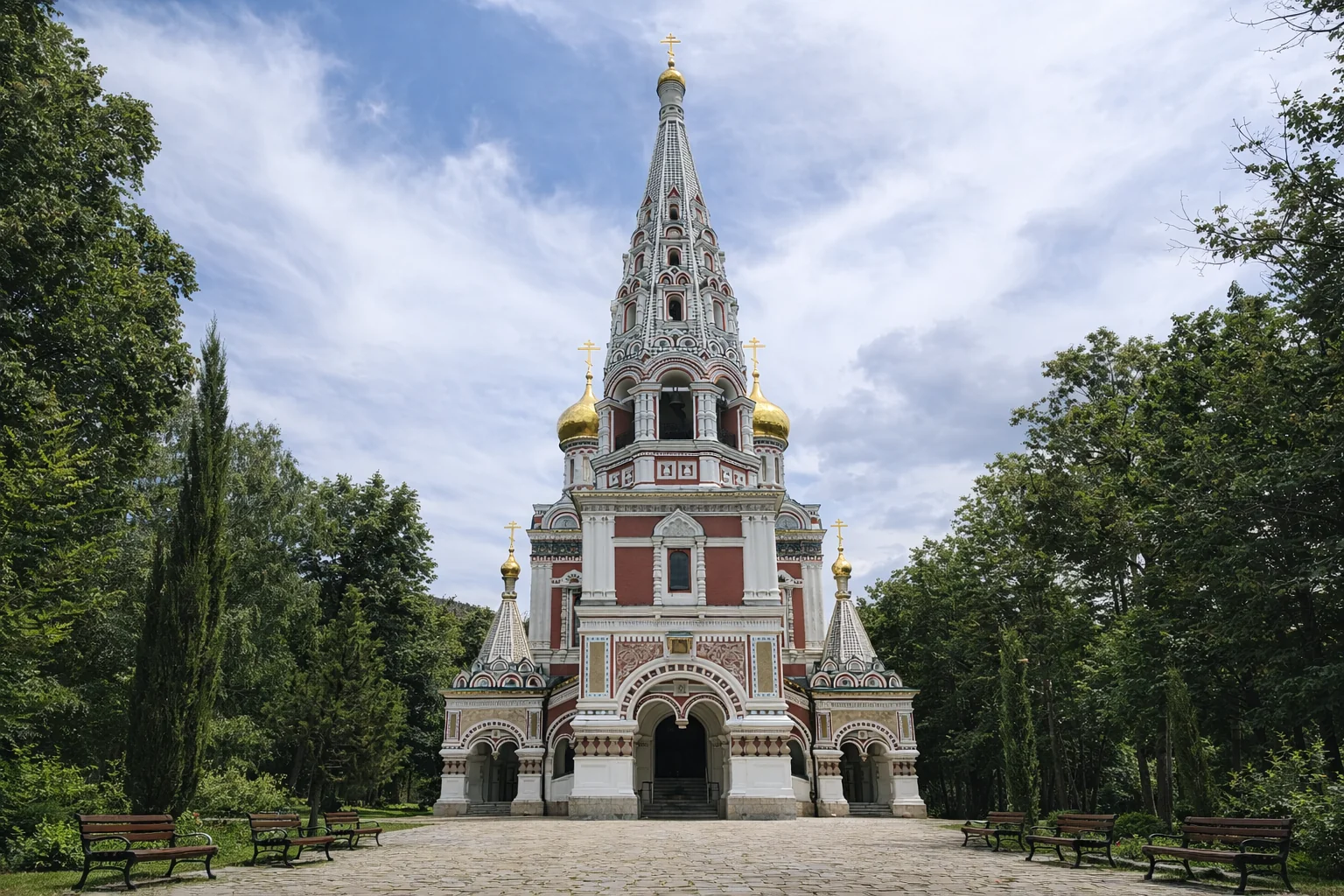
Shipka Memorial Church, officially called the Memorial Temple of the Birth of Christ, is one of Bulgaria’s most famous Orthodox churches. It stands near the town of Shipka in central Bulgaria. As a result, visitors can easily combine it with nearby historical attractions.
The church honours the Russian soldiers and Bulgarian volunteers who lost their lives during the Russo-Turkish War of 1877–1878. Therefore, it remains an important symbol of Bulgaria’s liberation from Ottoman rule.
Construction began in 1885 and finished in 1902. People in both Bulgaria and Russia donated money to support the project.
Architecture of Shipka Memorial Church:
The church is famous for its Russian Revival architecture. In addition, its golden domes make it one of Bulgaria’s most recognisable religious landmarks.
Visitors can admire elegant arches, colourful façades, and detailed stonework. Furthermore, the church stands against the beautiful backdrop of the Rose Valley and Balkan Mountains.
The bell tower contains several historic bells. One of these bells was made from melted ammunition used during the battles at Shipka Pass. Consequently, it serves as a reminder of the sacrifices made during the war.
Interior of Shipka Memorial Church:
Inside the church, visitors can admire frescoes, religious icons, marble decorations, and chandeliers. Moreover, the painted walls reflect both Russian and Bulgarian Orthodox traditions.
The church crypt contains marble sarcophagi holding the remains of Russian soldiers and Bulgarian fighters. As a result, the church serves as both a place of worship and an important war memorial.
Today, Shipka Memorial Church attracts pilgrims, photographers, historians, and tourists. At the same time, it remains one of central Bulgaria’s most visited landmarks.
Historical Importance:
Shipka Memorial Church commemorates the heroic defence of Shipka Pass during the Russo-Turkish War of 1877–1878. During the conflict, Bulgarian volunteers and Russian troops defended the strategic mountain pass against Ottoman forces.
As a result, they played a major role in Bulgaria’s liberation after nearly five centuries of Ottoman rule.
The church symbolises the friendship and shared sacrifices of Bulgarian and Russian soldiers. In addition, the names of many fallen soldiers appear inside the church.
The crypt also serves as a memorial burial site. Therefore, visitors can pay tribute to those who lost their lives during the battles around Shipka Pass.
Over the years, the church became a national symbol of freedom, remembrance, and Orthodox faith. Furthermore, its location near Shipka Monument strengthens its historical importance.
Today, Shipka Memorial Church continues to host religious ceremonies and memorial events. Consequently, it remains one of Bulgaria’s most significant religious and patriotic landmarks.
What to See:
- Golden Onion Domes
- Orthodox Frescoes and Icons
- Memorial Crypt
- Historic Bell Tower
- Russian Revival Architecture
- Marble Sarcophagi
- Scenic Balkan Mountain Views
- Peaceful Church Gardens
Best Time to Visit:
The best time to visit Shipka Memorial Church is during spring, summer, and early autumn when the surrounding Rose Valley and Balkan Mountain landscapes are especially beautiful and weather conditions are ideal for sightseeing.
What to Visit Nearby:
- Kazanlak
- Shipka Monument
- Buzludzha Monument
- Rose Valley
- Thracian Tomb of Kazanlak
- Etar Ethnographic Village
- Gabrovo
Quick Travel Information:
Shipka Memorial Church is located near the town of Shipka in central Bulgaria, approximately 12 kilometres from Kazanlak. The church can easily be reached by car while travelling through Shipka Pass and the Balkan Mountains. Parking is available nearby, and visitors are advised to dress respectfully as the church remains an active Orthodox religious site.
Useful Links:
Related Tours including Shipka Memorial Church:
Day Tour to the Valley of Roses & Thracian Kings – Lunch Included
Want to see this place?
We would love to help you explore Bulgaria! Whether you're travelling with friends, family, or colleagues, we offer both group tours and tailor-made trips designed around your interests. Let us create the perfect Bulgarian experience for you.