Jewish Heritage in Bulgaria – Synagogues, Museums and Historic Sites
Location: Across Bulgaria
Type: Jewish Heritage / Religious Heritage / Cultural History
Main Facts:
Jewish heritage forms an important part of Bulgaria’s long and diverse history. Jewish communities have lived in the lands of present-day Bulgaria for many centuries, leaving behind synagogues, cemeteries, schools, community buildings, museums and archaeological remains.
The heritage is especially visible in cities such as Sofia, Plovdiv, Vidin, Samokov, Pazardzhik, Ruse, Varna, Burgas and Silistra.
Some places remain active religious sites. Others have become museums, galleries or cultural centres, while several historic buildings are no longer in regular use.
For travellers, exploring Jewish heritage in Bulgaria provides another way to understand the country’s multicultural history and the communities that helped shape its cities.
Jewish History in Bulgaria:
Jewish presence in the region goes back at least 2,000 years. Archaeological discoveries in Plovdiv include the remains of an ancient synagogue from the Roman period, providing particularly important evidence of an established Jewish community in antiquity.
During the Middle Ages, Jewish communities were present in several Bulgarian towns. Jewish life later developed further during the Ottoman period, when Sephardic Jews arriving after the expulsion from Spain in the late 15th century established communities in places such as Sofia, Plovdiv, Dupnitsa, Kyustendil, Yambol and Burgas.
Over time, Jewish communities became closely connected with trade, crafts, education and urban life. Synagogues, schools, charitable organisations and community institutions were established in many Bulgarian towns.
Today, the surviving buildings and cemeteries provide important reminders of this history.
Jewish Heritage and the Second World War:
The history of Bulgarian Jews during the Second World War is an important and complex part of the country’s heritage.
Jewish citizens in Bulgaria were subjected to anti-Jewish legislation, restrictions, forced labour and other forms of persecution.
In 1943, plans to deport Jews from Bulgaria proper were stopped following opposition and protests involving politicians, members of the Bulgarian Orthodox Church, intellectuals and other members of society. More than 48,000 Jews from Bulgaria’s pre-war borders survived the Holocaust.
However, this history must also be understood in the context of Bulgaria’s wartime occupation of parts of Greece and Yugoslavia. Bulgarian authorities deported more than 11,000 Jews from occupied territories in Thrace, Macedonia and Pirot to German custody in March 1943. Almost all were subsequently murdered.
This distinction is essential when visiting museums and memorials connected with Jewish history in Bulgaria.
Sofia Jewish Heritage
Sofia has the largest concentration of Jewish heritage sites in Bulgaria and is the best place to begin exploring the country’s modern Jewish history.
Central Sofia Synagogue
The Central Sofia Synagogue is one of the city’s most recognisable religious buildings. Completed in 1909, it was designed by Austrian architect Friedrich Grünanger and reflects a richly decorated Moorish Revival style.
The large prayer hall contains an impressive central chandelier, while the building remains an active place of worship.
Jewish Museum of History
The Jewish Museum of History is located within the Central Synagogue complex. Its exhibitions explore Jewish life, culture and communities in Bulgaria, including the history of the Holocaust and the survival of Bulgaria’s Jewish population.
A museum exhibition known as “The Niche” also presents aspects of Jewish life and cultural heritage in Bulgaria.
Sofia Jewish Cemetery
The Jewish section of Sofia’s main cemetery contains thousands of graves and provides an important record of the city’s Jewish community.
The cemetery is primarily a place of remembrance rather than a conventional tourist attraction. Visitors should therefore approach it with appropriate respect.
Plovdiv Jewish Heritage
Plovdiv has one of Bulgaria’s most fascinating Jewish histories, stretching from antiquity to the present day.
Ancient Synagogue of Philippopolis
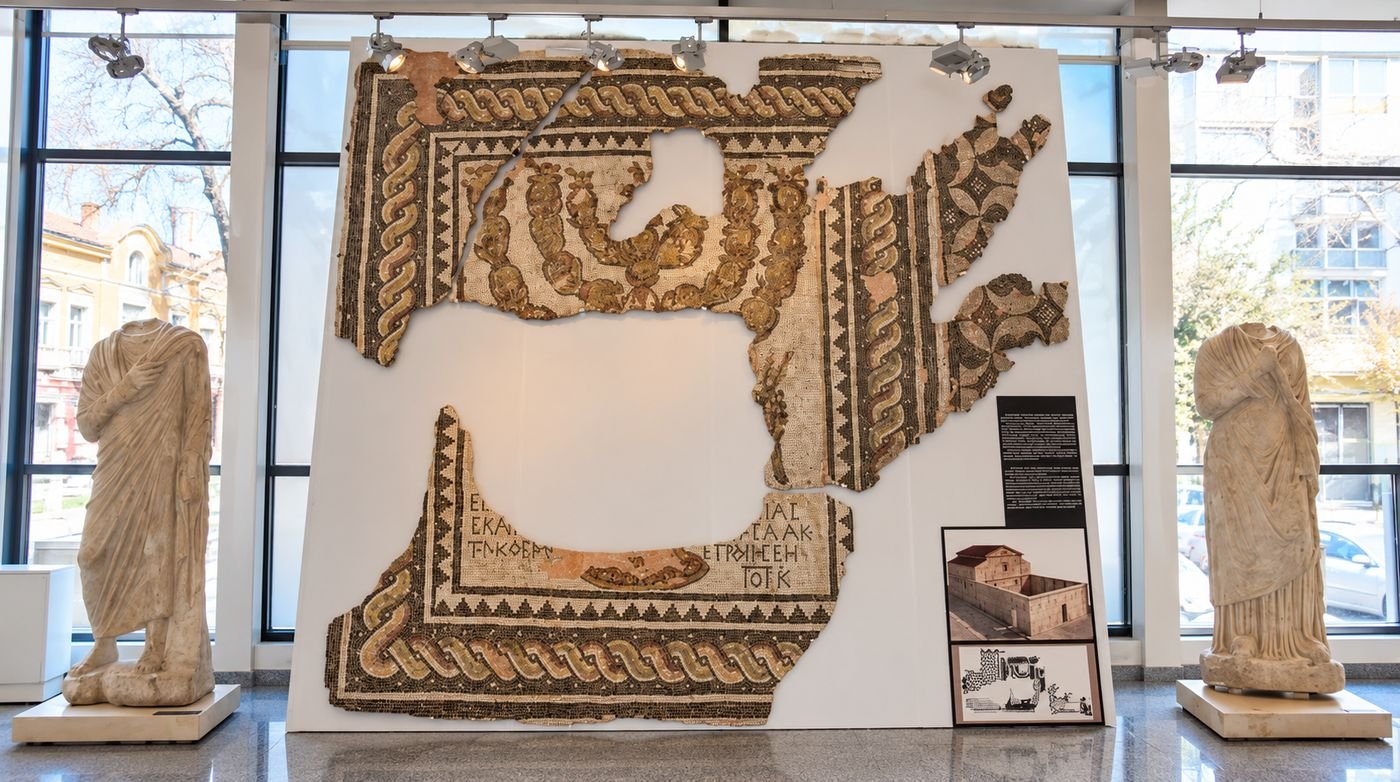
The remains of an ancient synagogue were discovered near the Bishop’s Basilica of Philippopolis.
The building dates from Roman times and contained a remarkable mosaic floor featuring a menorah and other decorative elements. The discovery provides important archaeological evidence of Jewish life in ancient Plovdiv.
The synagogue remains are part of the city’s wider archaeological heritage, while the surviving mosaics have been preserved and displayed through the city’s archaeological collections.
Zion Synagogue
The Zion Synagogue is the historic synagogue of Plovdiv’s Jewish community.
Its richly decorated interior reflects the Sephardic tradition of the community that developed in the city. The building remains an important part of Plovdiv’s Jewish heritage, although access for general visitors is restricted and should be checked in advance.
Jewish Heritage in the Old City
Plovdiv’s Jewish history can also be connected with the wider historic centre. Walking around the Old Town and central Plovdiv provides a chance to understand how Jewish residents lived alongside Bulgarian, Greek, Armenian, Ottoman and other communities.
Vidin Jewish Heritage
Vidin once had one of the most important Jewish communities along the Danube.
Vidin Synagogue – Jules Pascin Cultural Centre
The historic Vidin Synagogue was completed in 1894. For many years, the building stood in a severely deteriorated condition.
After extensive restoration, it reopened in 2023 as the Jules Pascin Cultural Centre, named after the internationally known artist Jules Pascin, who was born in Vidin to a Jewish family.
The building stands in the old Kaleto area, close to Baba Vida Fortress and other historic landmarks.
Vidin Jewish Cemetery
The historic Jewish cemetery provides another important connection with the former Jewish community of Vidin.
The site contains numerous gravestones with Hebrew, Bulgarian and Yiddish inscriptions, reflecting the long history and cultural diversity of the community.
Samokov Jewish Heritage
Samokov was once home to a prosperous Jewish community, and several buildings still preserve its memory.
Samokov Synagogue
The historic synagogue is one of the most impressive examples of 19th-century Balkan Jewish architecture in Bulgaria.
The building features richly decorated interiors, painted walls, carved woodwork and numerous windows. It is no longer an active synagogue, and its condition has suffered after decades of deterioration.
Visitors should check current access before planning a visit.
Sarafska House
Sarafska House was the home of the wealthy Jewish Arie family and is now used as a museum.
Its rooms, furniture and decorative woodwork provide an insight into the life of a prosperous Jewish family in 19th-century Samokov.
The house is one of the most accessible ways to explore the Jewish history of the town.
Pazardzhik Jewish Heritage
Pazardzhik had a substantial Jewish community and several historic synagogues.
Great Synagogue
The Great Synagogue dates from the 19th century and is an important example of Jewish architecture from the Bulgarian Revival period.
Its spacious interior and numerous windows reflect a distinctive combination of local architectural traditions and Jewish religious design.
Small Synagogue
The so-called Small Synagogue is one of the oldest surviving synagogues in Bulgaria. Although it has been adapted for other uses, its historic structure remains an important reminder of Pazardzhik’s former Jewish community.
Ruse Jewish Heritage
Ruse developed into an important commercial city on the Danube and once had a significant Jewish population.
Several historic buildings and cemeteries remain connected with its Jewish heritage. The city is also associated with the Canetti family, a prominent Jewish family from Ruse whose son Elias Canetti later became a Nobel Prize-winning writer.
Jewish heritage in Ruse is therefore closely connected with the city’s wider multicultural and commercial history.
Burgas Jewish Heritage
Burgas had a significant Jewish community during the 19th and early 20th centuries.
Former Burgas Synagogue
The former synagogue was built in the early 20th century and combines Neoclassical, Moorish and Byzantine influences.
Today, the building houses the Petko Zadgorski Art Gallery. Some original decorative features, including wall paintings, survive and provide clues to its former religious function.
Jewish Cemetery
The Jewish section of Burgas municipal cemetery preserves graves belonging to the former Jewish community.
Together, the former synagogue and cemetery provide a useful introduction to the city’s Jewish history.
Varna Jewish Heritage
Varna once had both Sephardic and Ashkenazi Jewish communities.
The city formerly contained two major synagogues, reflecting these different traditions. Their history illustrates the size and diversity of Varna’s Jewish population before the Second World War.
Today, the historic synagogue buildings have suffered major changes and deterioration, so they are better understood as heritage sites rather than conventional visitor attractions.
The Jewish section of Varna’s municipal cemetery remains another important historical location.
Silistra Jewish Heritage
Silistra has a particularly important Jewish pilgrimage site connected with Rabbi Eliezer Papo.
Tomb of Rabbi Eliezer Papo
Rabbi Eliezer Papo was a respected scholar of Jewish law and ethics who died in Silistra during a cholera epidemic in the 19th century.
His tomb remains a place of pilgrimage and is one of the most distinctive Jewish heritage sites in Bulgaria.
The surrounding historic Jewish cemetery contains numerous gravestones and provides further evidence of the former community.
Other Jewish Heritage Sites in Bulgaria
Jewish communities once existed in many other Bulgarian towns.
Among the places with documented Jewish heritage are Kyustendil, Dupnitsa, Haskovo, Shumen, Pleven, Sliven, Stara Zagora, Yambol, Chirpan, Kazanlak, Lom and Gotse Delchev.
Some retain Jewish cemeteries, while others have former synagogues or buildings connected with Jewish community life.
These places are less developed for tourism than Sofia or Plovdiv. Nevertheless, they are important for understanding how widespread Jewish communities once were across Bulgaria.
Jewish Cemeteries and Places of Remembrance:
Jewish cemeteries are among the most numerous surviving elements of Jewish heritage in Bulgaria.
Around two dozen Jewish cemeteries or Jewish cemetery sections have been documented across the country. They can be found in Sofia, Plovdiv, Vidin, Samokov, Shumen, Silistra, Varna, Burgas, Ruse, Pazardzhik, Kyustendil and many other towns.
These sites contain gravestones in Hebrew, Bulgarian, Yiddish and other languages. Together, they provide valuable evidence of family histories, migration and the development of Jewish communities.
However, cemeteries are places of remembrance rather than ordinary tourist attractions. Visitors should always behave respectfully and check whether access is permitted.
What to See:
• Central Sofia Synagogue and Jewish Museum of History
• Sofia Jewish Cemetery
• Ancient Synagogue of Philippopolis
• Zion Synagogue in Plovdiv
• Vidin Synagogue – Jules Pascin Cultural Centre
• Vidin Jewish Cemetery
• Samokov Synagogue
• Sarafska House Museum in Samokov
• Great and Small Synagogues in Pazardzhik
• Former Burgas Synagogue – Petko Zadgorski Art Gallery
• Jewish cemetery in Burgas
• Jewish heritage sites in Ruse
• Jewish cemetery in Varna
• Tomb of Rabbi Eliezer Papo in Silistra
• Jewish cemeteries and heritage sites in other Bulgarian towns
Best Time to Explore Jewish Heritage in Bulgaria:
Jewish heritage in Bulgaria can be explored throughout the year because many of the main museums and historic buildings are located in cities.
Spring and autumn are especially pleasant for combining heritage visits with walking tours.
Summer is also suitable, although city sightseeing is more comfortable during the morning or late afternoon.
For active synagogues and cemeteries, always check visitor arrangements in advance. Some sites have restricted access or may close during Jewish holidays and religious services.
What to Visit Nearby:
Jewish heritage sites are often located close to other major Bulgarian attractions.
In Sofia, visitors can combine the Central Synagogue with the Central Market Hall, Banya Bashi Mosque, Sofia History Museum and Alexander Nevsky Cathedral.
In Plovdiv, the Ancient Synagogue and Zion Synagogue can be explored alongside the Old Town, Ancient Theatre, Roman Stadium and Regional Archaeological Museum.
In Vidin, Jewish heritage combines naturally with Baba Vida Fortress, the Danube waterfront and the historic Old Town.
Samokov can be combined with Borovets, the nearby mountains and the town’s many Revival-era landmarks.
Silistra works well with the Danube gardens and the remains of ancient Durostorum.
Quick Travel Information:
The main Jewish heritage sites are spread across Bulgaria, so the best way to explore them is by combining them with wider city or regional itineraries.
Sofia and Plovdiv offer the easiest experiences for visitors because they have several Jewish heritage sites and museums alongside other major attractions.
Vidin, Samokov, Pazardzhik, Ruse, Burgas, Varna and Silistra are better approached as part of broader regional trips.
Access varies considerably. Some sites are active places of worship, while others are museums, galleries, cultural centres or historic buildings with limited public access.
Therefore, check current opening arrangements before travelling, particularly for synagogues, cemeteries and smaller heritage sites.
Useful Links:
• Google Maps – Jewish Heritage in Bulgaria
• Official Website – Organisation of Jews in Bulgaria “Shalom”
• Official Website – Central Sofia Synagogue
• Jewish Heritage Europe – Bulgaria
• Weather Forecast – Bulgaria