Ancient Cities in Bulgaria – Discover the Past in Modern Towns
Location: Across Bulgaria
Type: Historical, archaeological and cultural travel guide
Main Facts:
Bulgaria’s modern towns preserve remarkable evidence of ancient civilisations. Thracian settlements, Greek trading colonies and Roman cities once flourished across these lands. Today, their remains can be found beneath busy streets, in town squares, inside archaeological museums and among the historic neighbourhoods of coastal towns.
The best-known examples include Plovdiv, Sofia, Varna, Sozopol and Nessebar. However, places such as Stara Zagora, Kyustendil, Hisarya, Sandanski and Pomorie also reveal fascinating stories from antiquity.
- Location: Various regions of Bulgaria
- Main historical periods: Thracian, Ancient Greek, Roman, Late Antiquity and the Middle Ages
- Best-known ancient names: Philippopolis, Serdica, Odessos, Apollonia Pontica, Mesembria, Augusta Traiana, Pautalia, Diocletianopolis and Anhialos
- UNESCO World Heritage Site: The Ancient City of Nessebar
- Ideal trip length: Five to seven days for several destinations, with additional time for a wider route
- Best time to explore: Spring and autumn, when temperatures are generally comfortable for walking around archaeological sites
One important distinction is worth keeping in mind. Although these modern towns have ancient origins, their histories were not always continuous. Some settlements were destroyed, abandoned or gradually rebuilt in different locations. Their ancient remains nevertheless tell us how urban life developed across Bulgaria over thousands of years.
Ancient Cities in Bulgaria – From Thracian Settlements to Roman Towns
The history of Bulgaria’s cities began long before the Roman Empire. Thracian communities established fortified settlements, sanctuaries and centres of trade throughout the region. Later, Greek settlers founded coastal colonies along the Black Sea, connecting the area with the wider Mediterranean world.
Roman expansion brought major changes. Many settlements gained new public buildings, defensive walls, paved streets, baths and water-supply systems. Some became important administrative centres, while others developed around mineral springs, agricultural production or maritime trade.
After the decline of Roman rule, these places experienced further changes under the Byzantine Empire, medieval Bulgarian states and the Ottoman Empire. Their identities evolved over the centuries, yet ancient foundations and archaeological remains often survived beneath later buildings.
Exploring the ancient cities of Bulgaria therefore offers more than a look at Roman ruins. It reveals how different civilisations shaped the towns and cities that people live in today.
Plovdiv – Ancient Philippopolis
Plovdiv is one of the most compelling destinations for anyone interested in ancient cities in Bulgaria. Its history reaches back thousands of years, and archaeological evidence from different periods survives throughout the modern centre.
One of the earliest settlements developed on Nebet Tepe, one of the hills that define the historic city. In antiquity, the Thracian settlement was known as Eumolpia. Philip II of Macedon, father of Alexander the Great, conquered the area in 342 BC, after which the city became known as Philippopolis. Later, under Roman rule, it developed into a major urban centre often associated with the name Trimontium, meaning the City of the Three Hills.
Roman Plovdiv had an impressive collection of public buildings. Its streets, theatre, stadium and forum reflected its importance within the province of Thrace. Rather than remaining isolated ruins outside the modern city, many ancient structures are integrated into the centre or sit just below present-day streets.
What to See in Plovdiv:
The Ancient Theatre is one of Bulgaria’s most recognisable Roman monuments. Built into the hillside, it has been restored and continues to host performances and cultural events.
The Ancient Stadium lies beneath the central pedestrian area. Visitors can see part of the structure near Dzhumaya Square, while the wider stadium extends beneath the modern city.
Nebet Tepe offers a closer look at the settlement’s early history, with remains of ancient fortifications and views across Plovdiv. The archaeological remains of the Roman Forum and Odeon also help explain the layout of the ancient city.
Meanwhile, the Old Town adds another layer to the story. Its historic houses and narrow streets are mainly associated with later periods, but they occupy the same landscape that ancient communities once developed.
Plovdiv is particularly rewarding because visitors can move between ancient ruins, medieval remains and traditional Bulgarian architecture within a relatively small area.
Sofia – Ancient Serdica
Modern Sofia grew around an area that was already important in antiquity. Known as Serdica under Roman rule, the ancient settlement took its name from the Thracian Serdi, who inhabited the region.
The area’s mineral springs helped attract settlement, while its position along important routes supported trade and administration. During the Roman period, Serdica developed into a prominent city. Under Emperor Trajan, it became known as Ulpia Serdica and gained greater administrative importance.
The Roman city had defensive walls, paved streets, public buildings and baths. Later, it became an important centre during the early Christian period. Although much of ancient Serdica lies beneath modern construction, archaeological excavations have revealed substantial remains in the city centre.
What to See in Sofia
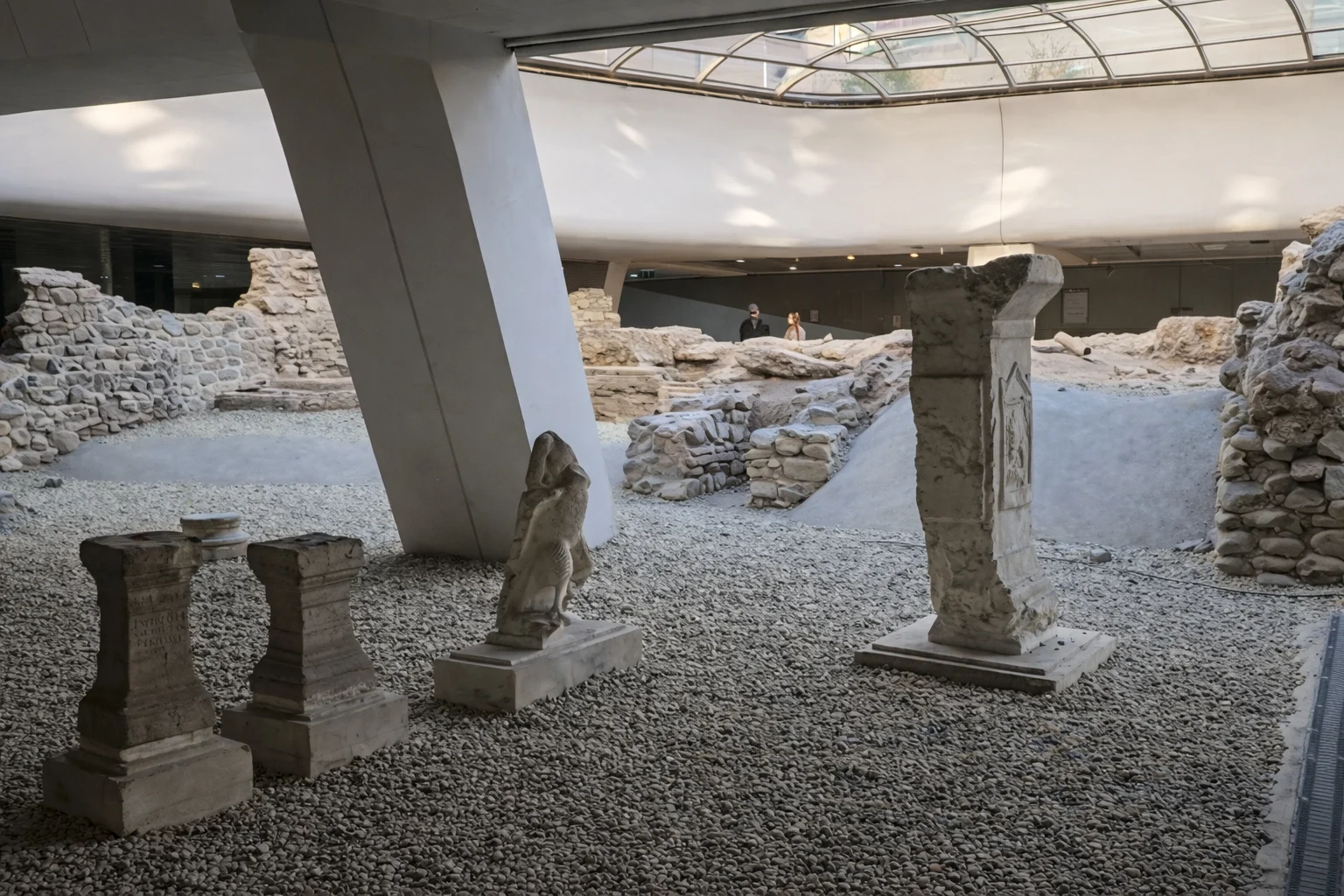
The Serdica Archaeological Complex, around the Largo and Maria Luisa Boulevard, is one of the easiest places to explore ancient Sofia. Here, visitors can see sections of streets, residential buildings, courtyards and remains of the Roman city’s infrastructure.
The Eastern Gate and Western Gate of Serdica provide further insight into the city’s defensive system. These remains are found in different parts of the central area.
Another important monument is the Rotunda of St George, a late Roman building that became a church. Its survival among modern government and commercial buildings illustrates how several periods of Sofia’s history overlap in a single urban landscape.
Sofia is an excellent destination for travellers who want to see how an ancient city has been incorporated into a modern European capital. Some remains are outdoors, while others lie below street level or are integrated into the Serdica metro station, where passengers can encounter the ruins of ancient Serdica as part of their everyday journey.
Varna – Ancient Odessos
Varna’s ancient history began before the modern city took its current form. Around the sixth century BC, Greek settlers from Miletus established a trading colony called Odessos on the Black Sea coast, at the site of an earlier Thracian settlement.
Odessos developed into an important port. During the Roman period, it gained public buildings, fortifications and extensive baths. Its coastal location supported trade, while its position connected it with settlements across the western Black Sea region.
The ancient city experienced destruction and disruption during the later centuries of antiquity. The history of Odessos and that of modern Varna are therefore connected, although this should not be understood as uninterrupted urban occupation on an identical site.
What to See in Varna
The Roman Thermae are the city’s most impressive surviving ancient monument. Built towards the end of the second century AD, these extensive public baths reveal the scale and sophistication of Roman urban life.
Their remains include sections of walls, rooms and architectural features that help visitors understand how the complex functioned. The baths were more than places for washing. They also played a role in social and public life.
Varna’s Archaeological Museum adds important context to the ancient city and the wider region. Its collections include discoveries from several periods, while the city’s other archaeological remains reflect the history of Odessos and its surroundings.
Although Varna is now known as a busy seaside destination, its ancient history provides another reason to explore beyond the beach and the Sea Garden.
Sozopol – Ancient Apollonia Pontica
Sozopol is one of Bulgaria’s most distinctive coastal towns. Its old peninsula preserves the atmosphere of a settlement shaped by maritime trade, while its archaeological history reaches back to antiquity.
Greek settlers from Miletus founded Apollonia Pontica around 610 BC, building on a location with earlier Thracian settlement. The city’s name linked it to Apollo, and its position beside the Black Sea helped it become an important trading centre.
Apollonia maintained connections with the Greek world through shipping and commerce. Over the centuries, the settlement experienced political changes and developed through Greek, Roman, Byzantine and medieval periods. The ancient name eventually gave way to Sozopol, while the old town continued to reflect its long coastal history.
What to See in Sozopol
The Old Town is the natural starting point. Its streets, traditional houses and coastal setting make the history of this ancient port easier to imagine, although many of the buildings visitors see today belong to later periods.
The archaeological remains of the old settlement, sections of ancient fortifications and the Archaeological Museum help explain Sozopol’s development from Apollonia Pontica into a medieval and modern town.
The combination of archaeology and historic architecture distinguishes Sozopol from destinations where Roman remains dominate the visitor experience. Here, ancient history forms part of a wider story about seafaring, trade and life on the Black Sea coast.
Sozopol works particularly well for visitors who want to combine cultural sightseeing with time beside the sea.
Nessebar – Ancient Mesembria
Nessebar stands on a rocky peninsula on Bulgaria’s Black Sea coast. Its ancient origins and surviving historic landscape make it one of the country’s most important cultural destinations.
The settlement began as a Thracian community, known in antiquity as Menebria. At the beginning of the sixth century BC, it became a Greek colony known as Mesembria. The location encouraged maritime trade, and the settlement developed as a meeting point between different cultures.
Over the centuries, Greek, Roman, Byzantine and medieval Bulgarian influences shaped the town. The peninsula still contains traces of its ancient fortifications and urban layout, alongside medieval churches and traditional houses from later periods.
The Ancient City of Nessebar is a UNESCO World Heritage Site. Its value comes not from a single monument, but from the historic landscape formed by successive periods of settlement.
What to See in Nessebar
Walk through the Old Town to explore the peninsula’s narrow streets and historic buildings. Remains of ancient fortifications can be seen among the later architecture, while archaeological discoveries help reconstruct the earlier Greek settlement.
The medieval churches are another important part of the experience. Although they belong to a later period than ancient Mesembria, they demonstrate how Nessebar continued to develop as an important town long after antiquity.
Traditional wooden houses from the nineteenth century add another layer to the historic landscape. Together, the ancient, medieval and more recent buildings make the Old Town an exceptional place to explore on foot.
Nessebar is especially appealing to visitors who want to see a historic settlement still woven into everyday life. It also offers an opportunity to combine cultural tourism with the beaches and resorts of the nearby coast.
Stara Zagora – Ancient Augusta Traiana
Stara Zagora has a rich history that extends far beyond the Roman period. However, its ancient city of Augusta Traiana remains one of the most important chapters in the town’s development.
The Roman city was founded around AD 106–107 under Emperor Trajan. It became a significant economic, administrative and cultural centre within the province of Thrace. During its period of growth, the city acquired monumental public buildings, paved streets, baths and defensive structures.
Much of Augusta Traiana lies beneath modern Stara Zagora. Nevertheless, several important remains can still be seen in the city centre, making it an accessible destination for those interested in Roman urban planning.
What to See in Stara Zagora
The Ancient Forum Complex of Augusta Traiana is the main attraction. It includes sections of a paved public square, the remains of public buildings, part of the principal east–west street and an auditorium associated with the ancient city’s public life.
The Western Gate and sections of the city’s defensive walls help explain how Augusta Traiana was laid out and protected. These remains are particularly interesting when considered alongside the modern street network.
Stara Zagora is also known for archaeological discoveries from periods before and after Roman rule. Its museums provide a broader view of the region’s long history.
For travellers exploring central Bulgaria, Stara Zagora offers a worthwhile stop between the country’s major cities and the historic sites of the Rose Valley.
Kyustendil – Ancient Pautalia
Kyustendil developed around mineral springs that attracted people to the area long before the Roman period. In antiquity, the city was known as Pautalia and became an important settlement in the region.
Under Roman rule, Pautalia grew as a centre associated with mineral waters, public life and regional administration. Its history reflects a wider pattern found in Bulgaria: settlements often flourished where natural resources and strategic location supported both daily life and trade.
Today, ancient Pautalia is less visually dominant than Roman Plovdiv or the fortifications of Hisarya. Nevertheless, archaeological remains and museum collections reveal the significance of the old city.
What to See in Kyustendil
The Regional History Museum is an excellent starting point. Its collections document the history of the area and include archaeological material from different periods.
Visitors can also explore the town’s historic centre and look for the surviving archaeological traces associated with ancient Pautalia. The wider area contains additional historical and cultural landmarks, showing how the settlement developed through Roman, medieval and more recent times.
Kyustendil is a good choice for travellers who are interested in ancient history alongside spa traditions. Its mineral springs remain an important feature of local life, connecting the modern town with one of the factors that helped its predecessor prosper.
Hisarya – Ancient Diocletianopolis
Hisarya is one of Bulgaria’s best destinations for exploring the remains of a Roman fortified town. Today, it is known mainly as a spa resort, but its ancient predecessor, Diocletianopolis, was an important settlement built around mineral springs.
The city developed significantly in the late third and early fourth centuries AD. It was named after Emperor Diocletian and acquired substantial defensive walls, public buildings and bathing facilities.
Much of the ancient city now lies within an archaeological area that is accessible from the modern town. Unlike places where ancient remains survive only in fragments, Hisarya still has extensive sections of its Roman fortifications.
What to See in Hisarya
The Roman defensive walls are the most striking feature. Parts of the fortifications remain remarkably well preserved, giving visitors a sense of the city’s former size and strength.
The South Gate, widely known as the Camels, is among the most recognisable landmarks. Its surviving structure offers a memorable view of the ancient city’s defensive architecture.
Further remains include Roman baths, basilicas and other buildings associated with urban life. The Roman Tomb of Hisarya, famous for its painted decoration and mosaic floor, offers a different perspective on ancient burial practices and social status.
Hisarya is particularly suitable for visitors who want to explore ancient architecture at a relaxed pace. Its archaeological landscape can be combined with the town’s mineral springs and spa facilities.
Sandanski – Ancient Settlement in the Struma Valley
Sandanski is best known today as a spa town near the Pirin Mountains. However, its history reaches back to ancient settlement around the area’s mineral springs.
The ancient city associated with the modern town is often identified with Parthicopolis, although identifying ancient place names is not always straightforward. What is clear is that the settlement developed during Roman and late antique periods, becoming an important local centre.
The archaeological remains show that the area had a substantial public and religious life. Early Christian buildings, streets and other structures provide evidence of the town’s importance during Late Antiquity.
What to See in Sandanski
The Early Christian Complex in the town centre is an excellent place to begin. Its remains include a basilica, a colonnaded structure and an ancient street dating from Late Antiquity.
The Archaeological Museum offers additional context, with material from the ancient settlement and its surroundings. It helps visitors understand how the town developed before becoming the modern resort known for its mild climate and mineral waters.
Sandanski offers a different experience from cities dominated by grand Roman theatres or fortifications. Its appeal lies in the relationship between the ancient settlement, early Christianity and the natural springs that continue to attract visitors today.
Pomorie – Ancient Anhialos
Pomorie is another Black Sea town with roots in antiquity. Its ancient name was Anhialos, and historical accounts suggest that it emerged as a trading settlement around the late fifth or fourth century BC.
The settlement is associated with Greek commercial activity along the western Black Sea coast. Later, Roman rule brought further development, and Anhialos became an important town in the region.
The ancient settlement lies largely beneath the modern urban landscape, so its remains are not as immediately visible as those in Plovdiv or Hisarya. However, the local museum and nearby archaeological monuments help visitors understand the area’s place in ancient history.
What to See in Pomorie
The Historical Museum of Pomorie has archaeological collections covering the region’s development from early settlement through the Roman and medieval periods. It is a useful first stop for visitors who want to learn about ancient Anhialos.
The town also preserves a long tradition of making use of the natural resources of its salt lake. This landscape has shaped local life over many centuries, even though the history of salt production is only one part of the wider story.
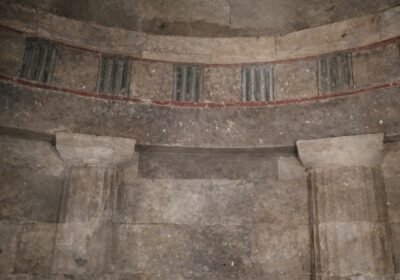
One particularly important monument lies just outside the modern town: the Ancient Dome Tomb of Pomorie. Dating to the Roman period, probably the second or third century AD, it is an unusual mausoleum with a large domed chamber and a hollow central column. Its architecture reflects local traditions within the Roman world, rather than representing one of the earlier Thracian royal tombs found elsewhere in Bulgaria.
Pomorie is therefore a useful destination for travellers interested in the meeting of Greek, Roman and local traditions along the Black Sea coast.
What to See – Choosing the Best Ancient Cities in Bulgaria
Each destination offers a different perspective on the country’s ancient history.
For the most accessible collection of Roman monuments in a vibrant modern city, Plovdiv is an excellent choice. Its Ancient Theatre, stadium, forum and remains on Nebet Tepe reveal different stages of its development.
Sofia offers a fascinating experience of Roman archaeology beneath a modern capital. The Serdica complex and the Rotunda of St George are especially worthwhile.
For ancient Greek and maritime history, Sozopol and Nessebar stand out. Both developed as coastal settlements connected to the Greek world, while their old towns preserve centuries of later architecture. Nessebar also offers the distinction of UNESCO World Heritage Site status.
Hisarya is one of the strongest options for visitors interested in Roman defensive architecture, while Stara Zagora provides a clear glimpse of the public layout of a Roman city.
Finally, Sandanski and Kyustendil show how mineral springs and local geography helped ancient settlements develop. Pomorie adds another dimension through its history as a Black Sea trading town and the nearby Ancient Dome Tomb, a remarkable Roman-period mausoleum that combines Roman-era construction with Thracian architectural traditions.
Best Time to Visit:
Spring and autumn are generally the best seasons for exploring ancient cities in Bulgaria. The weather is often comfortable for walking, and archaeological areas are usually more pleasant to explore than during the hottest summer days.
Summer works well for coastal destinations such as Sozopol, Nessebar, Varna and Pomorie. However, the seaside towns can become busy, particularly in July and August. Visiting ancient monuments in the morning or later in the afternoon can make the experience more comfortable.
Winter is suitable for city breaks in Plovdiv and Sofia, where museums, restaurants and cultural attractions provide alternatives when the weather is cold or wet. Nevertheless, opening times at outdoor archaeological sites and smaller museums may vary by season, so checking ahead is sensible.
What to Visit Nearby:
Several of these ancient cities can be combined with other historical and natural attractions.
Near Plovdiv, Asen’s Fortress and Bachkovo Monastery offer contrasting experiences of medieval history and religious heritage. Both can be included in a wider cultural trip through the Rhodope region.
From Sofia, visitors can add Boyana Church, a UNESCO World Heritage Site, or explore the foothills of Vitosha Mountain after spending time among the Roman remains in the city centre.
Sozopol provides easy access to the coastal scenery of the Ropotamo region, while Nessebar can be combined with the beaches and historic places around Burgas. Pomorie offers the salt lake and its natural landscape in addition to its museum and ancient tomb.
From Stara Zagora, travellers can continue towards the Rose Valley and the historic towns around Kazanlak. Meanwhile, Hisarya makes a useful base for exploring more of central Bulgaria, particularly for visitors combining archaeological sites with spa stays.
In the southwest, Sandanski is well placed for trips to Melnik, the Melnik Earth Pyramids and Rozhen Monastery. Kyustendil can be combined with local cultural sites and the surrounding foothills of the Osogovo Mountains.
Quick Travel Information:
Bulgaria’s ancient cities are spread across the country, so it is best to explore them by region rather than trying to cover all ten in a short trip.
From Sofia, Plovdiv is approximately 145 km away, usually around 1 hour 45 minutes to 2 hours by car. Hisarya is roughly 170 km away, while Stara Zagora is about 230 km away. Kyustendil and Sandanski lie to the southwest and can be reached in approximately 1 hour 20 minutes and 2 hours respectively, depending on traffic and the chosen route.
The Black Sea cities require more time from Sofia. Varna is roughly 440 km away, while Sozopol, Nessebar and Pomorie are around 390–420 km away. Allow approximately 4.5–5.5 hours for these drives, and consider staying overnight rather than making a return trip on the same day.
From Veliko Tarnovo, Stara Zagora is around 100 km away, or about 1 hour 25 minutes by car. Plovdiv is approximately 210 km away, taking roughly 2 hours 45 minutes. The coastal cities involve considerably longer journeys and are best explored as part of a dedicated Black Sea itinerary.
For a shorter historical trip, combine Plovdiv, Hisarya and Stara Zagora. For a city break, focus on Sofia and its Roman remains. To explore ancient Greek settlements and coastal history, allow several days for Sozopol, Nessebar, Varna and Pomorie.
At each destination, allow at least two to three hours for a basic archaeological visit. Plovdiv, Sofia and Nessebar merit longer stays because their ancient remains form only one part of a much broader historical landscape.
Useful Links:
• Google Maps – Ancient Cities in Bulgaria
• Official Website – Ancient Plovdiv
• Official Website – Ancient Serdica in Sofia
• Official Website – Varna History
• UNESCO World Heritage Site – Ancient City of Nessebar
• Official Website – Ancient Forum of Augusta Traiana, Stara Zagora
• Regional History Museum – Kyustendil
• Official Tourism Website – Hisarya
• Official Tourism Website – Sandanski
• Official Tourism Website – Pomorie
• Weather Forecast – Bulgaria