Sandanski, Bulgaria – Spa Town and Multi-Day Tour Stop
Location: Blagoevgrad Province, south-western Bulgaria, at the foothills of the Pirin Mountains
Type: Spa town / Historic destination / Thermal resort / Cultural and natural attractions
Sandanski is a popular spa town in south-western Bulgaria, known for its mineral springs, mild climate and ancient history. Situated in the Struma Valley, close to the foothills of the Pirin Mountains, it offers several experiences: exploring archaeological sites, visiting traditional churches and enjoying its extensive green spaces.
The town combines thermal bathing and cultural heritage with opportunities for excursions into the surrounding region. Nearby destinations include Melnik, the Melnik Pyramids, Rozhen Monastery, Rupite and the natural attractions of the Pirin Mountains.
Main Facts:
- Location: Blagoevgrad Province, south-western Bulgaria.
- Altitude: Approximately 240 metres above sea level.
- Former name: Sveti Vrach, until 1947.
- Name origin: Renamed in honour of Bulgarian revolutionary Yane Sandanski.
- Ancient heritage: Thracian and Roman settlement.
- Mineral springs: More than 80 in the wider municipality, with temperatures of approximately 42–81°C.
- Main park: Sveti Vrach Town Park, covering 344 decares.
- Regional setting: Struma Valley, near the Pirin Mountains.
Historical Importance:
Ancient Thracian and Roman Settlement
The area around present-day Sandanski has a long history of human settlement, dating back to the late thirteenth and early twelfth centuries BC. Its mineral springs and favourable geographical position in the Struma Valley attracted communities long before the Roman period.
Ancient writers, including Plutarch and Strabo, mention the Thracian tribes known as the Medi or Maedi in the wider Middle Struma Valley. Some local historical accounts suggest that the early settlement may have been called Medius, but this name is not confirmed by the available archaeological evidence. The Medi or Maedi were the people who inhabited the region, rather than an established name for the town.
The ancient name of the Roman city beneath modern Sandanski was debated by historians for many years. Following archaeological research, the settlement is now generally identified as Parthicopolis, an important urban centre that developed during the Roman period. It received civic status under Emperor Trajan in the early second century AD.
Local tradition also associates the region with Spartacus, the Thracian gladiator who led the major slave uprising against Rome in the first century BC. He is traditionally linked to the Maedi tribe, which inhabited the surrounding area, although his exact birthplace has not been conclusively established.
An Important Early Christian Centre
Between the fourth and sixth centuries, the ancient settlement became an important Christian and episcopal centre. Archaeological remains include several important structures: a large basilica, a baptistery, an atrium and buildings associated with the bishop’s residence.
The Episcopal Complex is particularly significant for its monumental architecture and decorative features: colourful floor mosaics, columns and sections of a marble altar screen. The settlement was severely affected by invasions towards the end of the sixth century, but its archaeological remains provide valuable evidence of early Christian life in the region.
From Sveti Vrach to Sandanski
For centuries, the settlement was known as Sveti Vrach, a name associated with Saints Cosmas and Damian, the Christian healer brothers traditionally connected with the area’s healing springs.
The town retained this name until 1947, when it was renamed Sandanski in honour of Yane Sandanski (1872–1915), a Bulgarian revolutionary and prominent figure in the Macedonian revolutionary movement.
What to See:
Archaeological Museum of Sandanski
The Archaeological Museum is one of the town’s principal cultural attractions. Founded in 1936, it specialises in the ancient history of the region. Its collections cover several historical periods: prehistoric times, antiquity and the Middle Ages. They also include Roman funerary monuments and other finds from the ancient settlement.
The museum building, opened in 1970, stands above the foundations of an early Christian basilica. This setting allows visitors to see the connection between the museum and the archaeological remains beneath it.
Early Christian Complex and Episcopal Basilica
The Early Christian Complex is among Sandanski’s most important historical sites. It includes several archaeological features: the remains of a basilica, an atrium, supporting rooms and sections of an ancient street.
The Episcopal Complex illustrates the importance of the city during the fifth and sixth centuries. Its large basilica is notable for its decorative details: floor mosaics, columns and architectural features. The remains of the baptistery and other religious buildings provide further evidence of the area’s early Christian heritage.
Church of Saints Cosmas and Damian
Built in 1861, the Church of Saints Cosmas and Damian is an important surviving example of Bulgarian National Revival religious architecture in Sandanski.
The church is known for its traditional design and richly decorated three-tier iconostasis. Its wall paintings were produced by artists associated with the Melnik painting school, including well-known local masters. The building preserves much of its original architectural and decorative character.
Monastery of Saints Cosmas and Damian
Located approximately two kilometres north of the town centre, this small monastery is surrounded by greenery near the Sandanska Bistritsa River. Its history dates back to the fourteenth century, although the original complex was later destroyed.
The monastery was restored in 1928. Its grounds contain several religious features: the main church and chapels dedicated to Saint Petka and Saint Demetrius. Local religious tradition connects the site with Saints Cosmas and Damian and their healing work.
Spartacus Monument
The Monument to Spartacus stands near the entrance to Sandanski and is one of the town’s best-known landmarks. The architectural and sculptural complex features a large white-stone figure of the ancient Thracian leader.
The monument reflects the local tradition connecting Spartacus with the Maedi tribe and the surrounding region. It is a reminder of the area’s ancient past and its association with one of the best-known figures of the Roman era.
Sveti Vrach Town Park
Sveti Vrach Town Park is one of Sandanski’s main attractions and a popular recreational area. Covering approximately 34.4 hectares, it contains more than 200 plant species, including Mediterranean and other ornamental varieties.
The park offers several features: broad walking paths, mature trees, landscaped water areas, playgrounds and an artificial lake. Two swinging wooden bridges cross the Sandanska Bistritsa River, while the grounds also include a summer theatre, sports facilities and an outdoor swimming complex.
Its mild local climate supports a varied collection of plants: magnolias, sequoias, ginkgo trees, cork oaks and old plane trees.
Mineral Springs and Spa Facilities
Sandanski is one of Bulgaria’s established balneological and spa destinations. The wider municipality has more than 80 mineral springs, with water temperatures reported between approximately 42°C and 81°C.
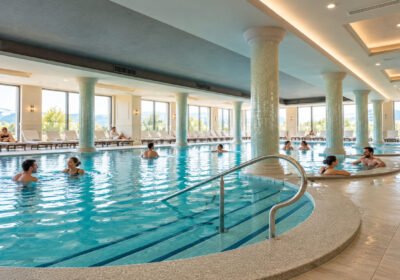
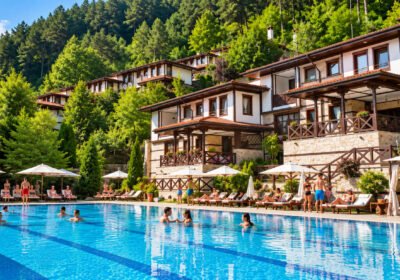
The mineral water is used by local hotels and spa centres for bathing and wellness treatments. Visitors can find several types of facilities: indoor and outdoor pools, thermal areas and relaxation treatments. The town’s reputation as a spa destination is closely connected with its natural springs and mild climate.
Central Pedestrian Area
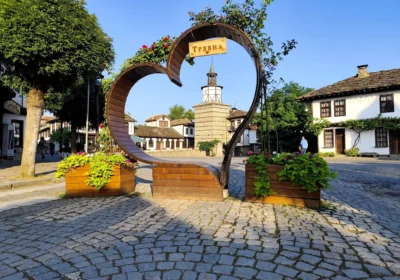
The centre of Sandanski is pleasant to explore on foot. Its pedestrian streets offer a mixture of amenities: cafés, restaurants, shops and public spaces. The Archaeological Museum and several historic buildings are also nearby.
The central area is a convenient starting point for visiting the town’s archaeological remains, churches and parks.
Best Time to Visit:
Sandanski can be visited throughout the year, thanks to its relatively mild climate and spa facilities. Spring and autumn are particularly comfortable for sightseeing and walking in Sveti Vrach Park, while summer is suitable for combining the town with excursions into the Pirin Mountains. The thermal facilities also make Sandanski an appealing destination during the cooler months.
What to Visit Nearby:
Sandanski is surrounded by historic towns, monasteries, archaeological sites and natural attractions. Several worthwhile places can be visited on excursions from the town:
- Melnik: Bulgaria’s smallest town, known for its traditional architecture, historic houses and local wine.
- Kordopulova House: A large historic merchant’s house in Melnik, known for its architecture, decorative rooms and traditional wine cellars.
- Melnik Historical Museum: Exhibitions covering the history, culture and everyday life of the town and surrounding region.
- Melnik Pyramids: Unusual sandstone formations created by erosion, rising above the landscape around Melnik.
- Rozhen Monastery: A historic monastery near Melnik, with a traditional courtyard, frescoes and an important collection of religious art.
- Church of Saints Cyril and Methodius, Rozhen: A church near the monastery associated with Yane Sandanski, whose grave is located in its churchyard.
- Rupite: A protected natural area at the foot of the volcanic Kozhuh Hill, famous for its mineral springs and association with the Bulgarian prophetess Baba Vanga.
- Heraclea Sintica: An ancient city near Rupite, with archaeological remains dating from the fourth century BC to the sixth century AD.
- Church of Saint Petka of Bulgaria, Rupite: A memorial church built in 1994 and closely associated with Baba Vanga.
- Petrich: A nearby town with a historical museum and access to several important cultural and archaeological attractions.
- Samuil’s Fortress: A national park-museum near the village of Klyuch, commemorating the events surrounding the 1014 Battle of Kleidion during the reign of Tsar Samuil.
- Zlatolist: A small village known for the Church of Saint George, built in 1857, and its historic wall paintings. The church is also associated with the Bulgarian spiritual figure Venerable Stoina.
- Popina Laka and Popinolashki Waterfall: A mountain locality in the southern Pirin Mountains, surrounded by coniferous forests. The waterfall is approximately 11 metres high.
- Pirin National Park: A protected mountain landscape with ancient forests, glacial lakes, hiking routes and high mountain scenery.
- Villa Melnik Winery: A winery in the Melnik wine region where visitors can learn about local grape varieties and arrange wine tastings.
- Ilindentsi: A village in the Struma Valley known for its connection with sculpture and outdoor art, offering a different cultural excursion from the region’s historic towns and monasteries.
Quick Travel Information:
Location: South-western Bulgaria, approximately 160 kilometres south of Sofia.
Recommended visit duration: One full day for the main town attractions. Allow two days or more when including spa facilities and excursions to nearby destinations.
Multi-Day Tour Stop: Sandanski is a worthwhile stop on a multi-day tour of Bulgaria, particularly when exploring the south-western part of the country. It combines several experiences: ancient history, spa facilities and access to nearby attractions such as Melnik, Rozhen Monastery, Rupite, Heraclea Sintica, Samuil’s Fortress and the Pirin Mountains.
Useful Links:
- Sandanski Municipality – History and Culture
- Sandanski Municipality – Local Attractions
- Visit Sandanski – Tourism Information
- Archaeological Museum of Sandanski
- Ministry of Tourism – Sandanski and the Struma Region
- Ministry of Tourism – Popina Laka
- Ministry of Tourism – Rupite
- Ministry of Tourism – Samuil’s Fortress