Lovech, Bulgaria – Covered Bridge and Historic Sights
Location: Lovech, Bulgaria
Type: Historic City / Bulgarian Revival Heritage / Medieval Heritage
Main Facts:
Lovech is one of the most attractive historic towns in northern Bulgaria. Set along the Osam River, the city combines a famous covered bridge, a preserved Bulgarian Revival quarter, medieval fortress ruins and important sites connected with Vasil Levski.
The Covered Bridge is Lovech’s best-known landmark. Built by the famous Bulgarian master builder Kolyu Ficheto in the 19th century, it connects the modern part of the city with the historic Varosha quarter.
Above the Old Town stands Hisarya Fortress, where an important peace treaty with Byzantium was signed in 1187. The agreement recognised the restoration of the Bulgarian state and is closely associated with the beginning of the Second Bulgarian Empire.
Lovech is also strongly connected with Vasil Levski, known as the Apostle of Freedom. During the 19th century, he made the city an important centre of the Bulgarian revolutionary network.
History of Lovech:
Lovech has a long history stretching back to antiquity. Archaeological discoveries around the fortress hill show that the area was occupied during prehistoric times, while a Thracian settlement later developed on the same hill.
The settlement became particularly important during the Roman and medieval periods. Its position along the Osam River provided a natural route between the Danube plain and the Balkan Mountains.
During the Middle Ages, Lovech developed into an important fortified centre. The fortress on Hisarya Hill protected the settlement and controlled routes through the region.
A major event took place here in 1187, when a peace treaty between the Bulgarian ruler Ivan Asen I and the Byzantine Empire was concluded. The agreement confirmed the restoration of Bulgarian independence after decades of Byzantine rule.
Over the following centuries, Lovech remained an important regional centre. During the Bulgarian Revival, trade and crafts expanded, while wealthy merchants built the houses that still characterise Varosha today.
Lovech and Vasil Levski:
Lovech occupies an important place in Bulgaria’s national liberation history.
Vasil Levski used the city as the centre of the Internal Revolutionary Organisation during the early 1870s. From Lovech, he organised a network of revolutionary committees across the country.
The city therefore became one of the most important centres of revolutionary activity before the Liberation of Bulgaria.
Today, the Vasil Levski Museum in Lovech preserves one of the richest collections associated with the Apostle of Freedom. Visitors can see personal objects, weapons, documents and other materials connected with Levski and his associates.
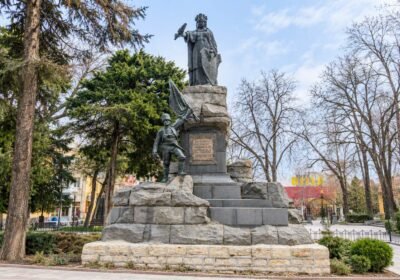
A large monument to Levski also stands on Hisarya Hill above the Old Town, overlooking the city.
The Covered Bridge:
The Covered Bridge is the symbol of Lovech.
Kolyu Ficheto built the famous bridge in the 1870s, continuing an older local tradition of covered bridges with shops. The original structure was destroyed by fire in 1925.
A new bridge was built between 1927 and 1931. Later reconstruction work brought its appearance closer to the historic design.
Today, the bridge functions as a covered pedestrian and commercial street. Small shops, cafés and souvenir stalls occupy the interior, while views of the Osam River open from the sides.
Crossing the bridge is one of the simplest and most enjoyable ways to begin exploring Lovech.
Varosha Old Town:
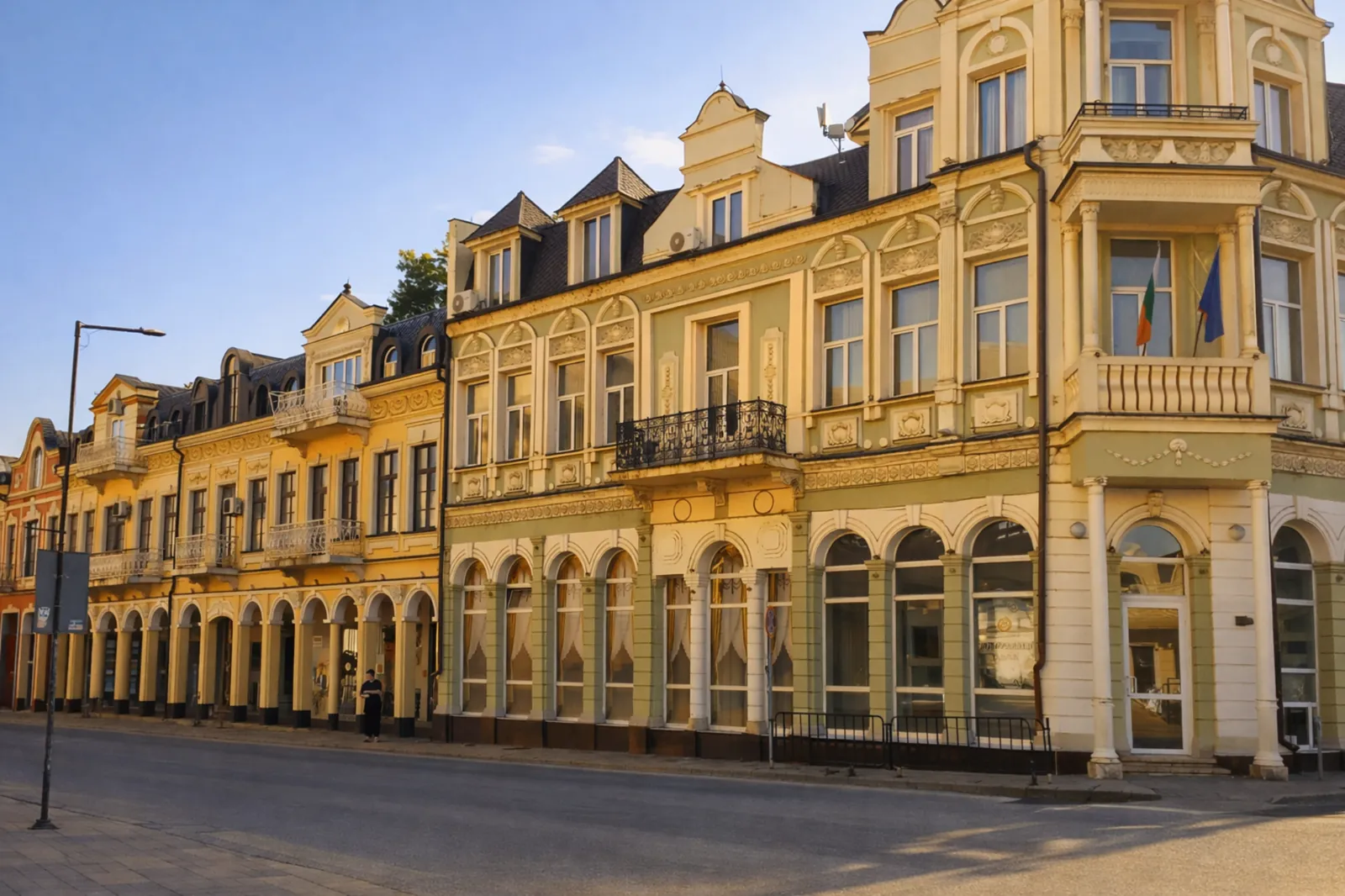
Varosha is Lovech’s historic Bulgarian Revival quarter.
The neighbourhood spreads along the hillside above the Osam River, with narrow lanes, cobbled streets, stone walls and traditional two-storey houses.
Many buildings have wooden verandas, large entrances and enclosed courtyards typical of Bulgarian Revival architecture.
Walking through Varosha is particularly pleasant because the area remains relatively quiet. In addition, several museums and galleries are located within the historic houses.
The quarter provides a good impression of what life in a prosperous Bulgarian town looked like during the 19th century.
Hisarya Fortress:
Hisarya Fortress stands on a hill above Lovech and is one of the city’s most important archaeological sites.
The fortress has much older origins than the medieval period, with archaeological evidence of prehistoric and Thracian occupation.
The medieval fortification became an important stronghold of the Bulgarian state. Today, visitors can see sections of the defensive walls, archaeological remains and the large monument to Vasil Levski.
The elevated position also provides excellent views across Lovech and the Osam River valley.
Vasil Levski Museum:
The Vasil Levski Museum is located in the Varosha quarter and is one of Lovech’s most important museums.
The collection focuses on Levski’s revolutionary activities and the role of the Lovech revolutionary committee.
Personal objects, documents, weapons and other artefacts help explain the organisation of the revolutionary movement and Levski’s role in it.
For visitors interested in Bulgarian history, the museum adds considerable depth to a walk around Varosha and Hisarya Fortress.
Ethnographic Complex:
The Ethnographic Complex consists of two historic houses, the Drasova House and Rashova House.
The exhibitions recreate everyday life in Lovech during the Bulgarian Revival and the early 20th century.
Visitors can see traditional furniture, household objects, clothing and items connected with trade and wine production.
The complex is especially useful for understanding the lives of ordinary families rather than focusing only on major historical events.
Stratesh Park and Bash Bunar Alley:
Lovech also offers green spaces and scenic walking routes.
Stratesh Park rises above the town and provides views across the Osam River and surrounding hills. The park is a pleasant place for a quieter walk after exploring the historic centre.
Bash Bunar Alley follows the Osam River beneath the cliffs. It is one of Lovech’s most attractive urban walking routes and provides a different perspective of the town.
What to See:
• Covered Bridge – Kolyu Ficheto’s famous landmark
• Varosha Architectural and Historical Reserve
• Hisarya Medieval Fortress
• Monument to Vasil Levski
• Vasil Levski Museum
• Ethnographic Complex – Drasova and Rashova Houses
• Holy Sunday Church and art exhibition
• Regional History Museum – Lovech
• Stratesh Park
• Bash Bunar Alley
• Osam River waterfront
Best Time to Visit:
Lovech can be visited throughout the year.
Spring and autumn are particularly pleasant for walking through Varosha, climbing to Hisarya Fortress and exploring the riverside areas.
Summer is also a good time to visit, although the middle of the day can be hot. Early morning or late afternoon is more comfortable for walking around the historic centre.
Winter brings a quieter atmosphere and can be particularly attractive when snow covers the hills around the fortress.
What to Visit Nearby:
• Devetashka Cave
• Krushuna Waterfalls
• Kakrina Inn – Museum of Vasil Levski
• Troyan Monastery
• Troyan
• Architectural Reserve Staro Stefanovo
• Glozhene Monastery
Quick Travel Information:
Lovech is approximately 150 km from Sofia, around 2 hours by car, and about 85 km from Veliko Tarnovo, around 1 hour and 15 minutes by car.
The main sights are concentrated around the city centre, making Lovech easy to explore on foot. Allow at least 3–4 hours for the Covered Bridge, Varosha, Hisarya Fortress and the Vasil Levski Museum.
Lovech also works very well as a day trip from Veliko Tarnovo or Sofia. From Veliko Tarnovo, you can combine the city with Devetashka Cave or Krushuna Waterfalls, while a longer trip from Sofia can include several attractions in the Lovech region.
For visitors travelling by car, parking is available in and around the central part of the city, although the historic streets of Varosha are best explored on foot.
Useful Links:
• Google Maps – Lovech
• Official Website – Lovech Tourist Portal
• Official Website – Regional Historical Museum – Lovech
• Weather Forecast – Lovech
Related Tours including Krushuna Waterfalls: