Troyan Monastery – Bulgaria’s Historic Orthodox Monastery
Location: Near Troyan, Balkan Mountains, Bulgaria
Type: Eastern Orthodox Monastery / Religious Landmark / Historical Site
Main Facts:
Troyan Monastery is one of Bulgaria’s most famous Orthodox monasteries. It stands in the Balkan Mountains near the town of Troyan in central Bulgaria. As a result, visitors enjoy both history and beautiful mountain scenery.
The monastery is officially known as the Monastery of the Dormition of the Holy Mother of God. It is famous for its colourful frescoes, traditional architecture, and peaceful setting. In addition, it remains an important religious centre in Bulgaria.
Monks founded Troyan Monastery during the early 17th century. Over time, it became a centre of faith, education, and culture. Therefore, it played an important role during the Ottoman period.
The monastery is also home to the famous “Three-Handed” icon of the Holy Mother of God. Many Orthodox believers visit the monastery to see this sacred icon. Consequently, it has become one of Bulgaria’s leading pilgrimage sites.
Troyan Monastery Architecture
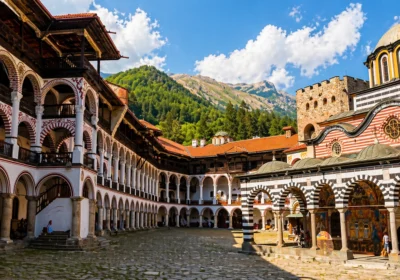
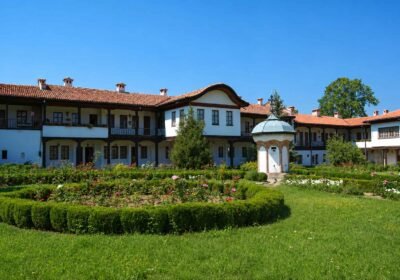
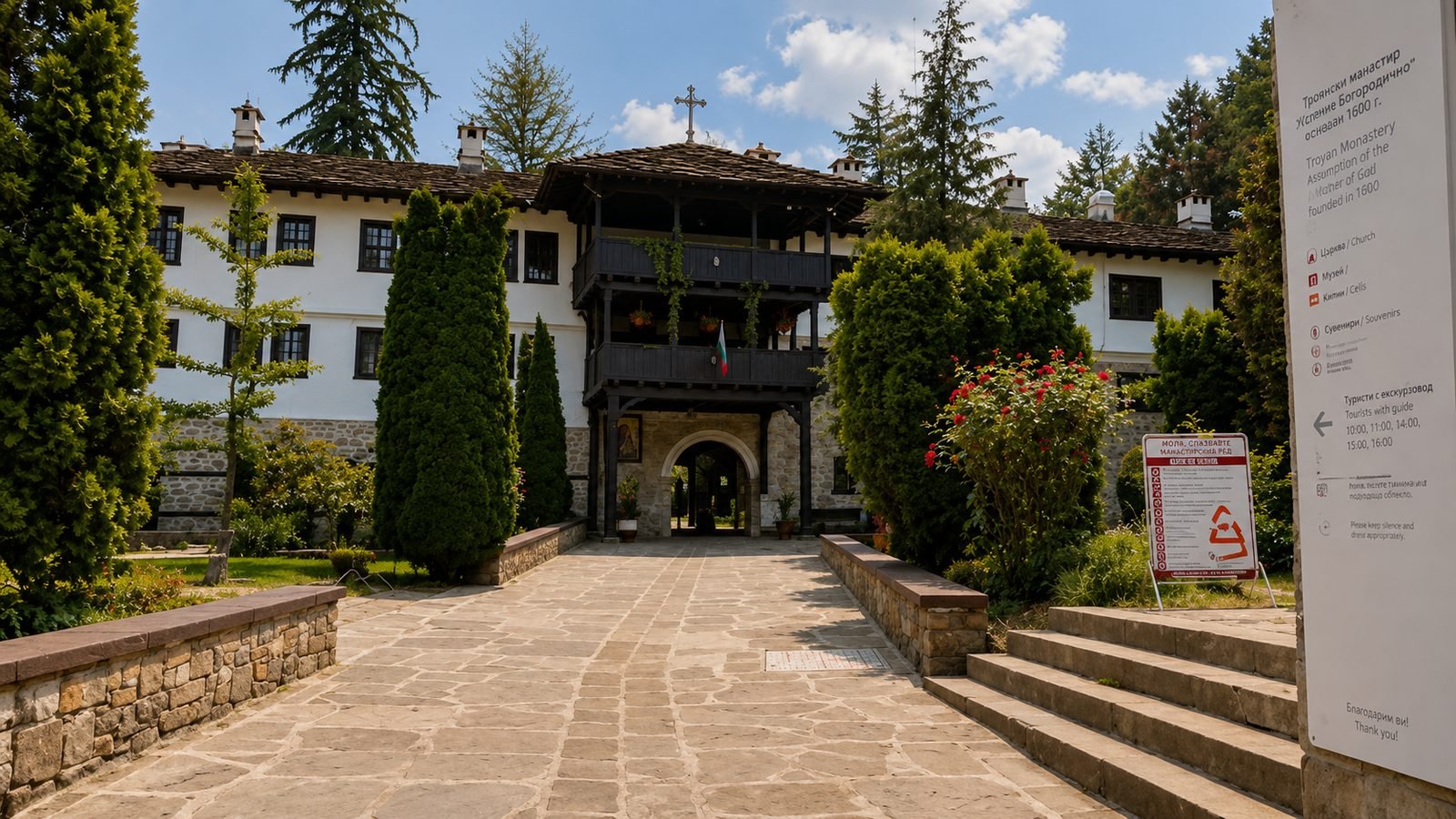
The monastery features beautiful National Revival architecture. Visitors can see decorated arcades, peaceful courtyards, and traditional buildings. Moreover, forests and mountain views surround the complex.
The main church contains remarkable frescoes by Zahari Zograf. He was one of Bulgaria’s most respected National Revival artists. His paintings remain among the finest examples of Bulgarian religious art.
Visitors can also explore museum collections, historical exhibits, gardens, and walking paths. Furthermore, the surrounding landscape offers excellent opportunities for photography and relaxation.
The monastery is also producing its own Troyanska Slivova Rakia. This traditional plum brandy has strong links to the Troyan region. As a result, it forms an important part of local culture.
Today, Troyan Monastery attracts pilgrims, photographers, historians, artists, and travellers. Therefore, it remains one of Bulgaria’s most visited monasteries.
Troyan Monastery Historical Importance:
Troyan Monastery helped preserve Bulgarian religion and culture during Ottoman rule. Like many monasteries, it protected books, traditions, and religious life. Consequently, it became an important spiritual centre.
During the Bulgarian National Revival, the monastery gained even greater importance. In addition, it supported the growth of Bulgarian identity and culture.
National hero Vasil Levski often visited the monastery. He also established a secret revolutionary committee there. Therefore, the monastery became connected with Bulgaria’s struggle for independence.
The monastery gained further recognition after Zahari Zograf completed his famous frescoes. His work combined Orthodox themes with scenes from everyday life. As a result, the monastery became an important centre of Bulgarian art.
Over the centuries, Troyan Monastery survived wars, political changes, and restoration projects. Nevertheless, it preserved its religious and historical character.
Today, the monastery remains one of Bulgaria’s most respected religious sites. Moreover, it continues to symbolise Bulgarian faith, culture, and heritage.
Best Time to Visit:
Spring, summer, and autumn are the best times to visit Troyan Monastery. During these seasons, the surrounding mountain scenery is especially beautiful. In addition, the weather is ideal for sightseeing and walking.
Autumn is particularly popular because of the colourful forests. Meanwhile, summer offers long days and pleasant temperatures. As a result, visitors can fully enjoy both the monastery and the surrounding nature.
What to Visit Nearby:
- Troyan
- Krushuna Waterfalls
- Saeva Dupka Cave
- Beklemeto Pass
- Central Balkan National Park
- Oreshak Village
- Lovech Fortress
- Shipkovo Mineral Springs
Quick Travel Information:
Troyan Monastery is located approximately 10 kilometres southeast of Troyan in central Bulgaria and can easily be reached by car or local transport. Parking, accommodation, restaurants, and souvenir shops are available near the monastery. Visitors should dress respectfully as the monastery remains an active Orthodox religious site.
Useful Links:
Want to see this place?
We would love to help you explore Bulgaria! Whether you're travelling with friends, family, or colleagues, we offer both group tours and tailor-made trips designed around your interests. Let us create the perfect Bulgarian experience for you.