Etar Ethnographic Village – Gabrovo, Bulgaria
Location: Near Gabrovo, Central Bulgaria
Type: Open-Air Museum / Ethnographic Village / Cultural Landmark
Main Facts:
Etar Ethnographic Village is one of the most popular open-air museums in Bulgaria. It is located just a few kilometres south of Gabrovo. Today, the museum attracts visitors interested in history, culture, architecture, and traditional crafts.
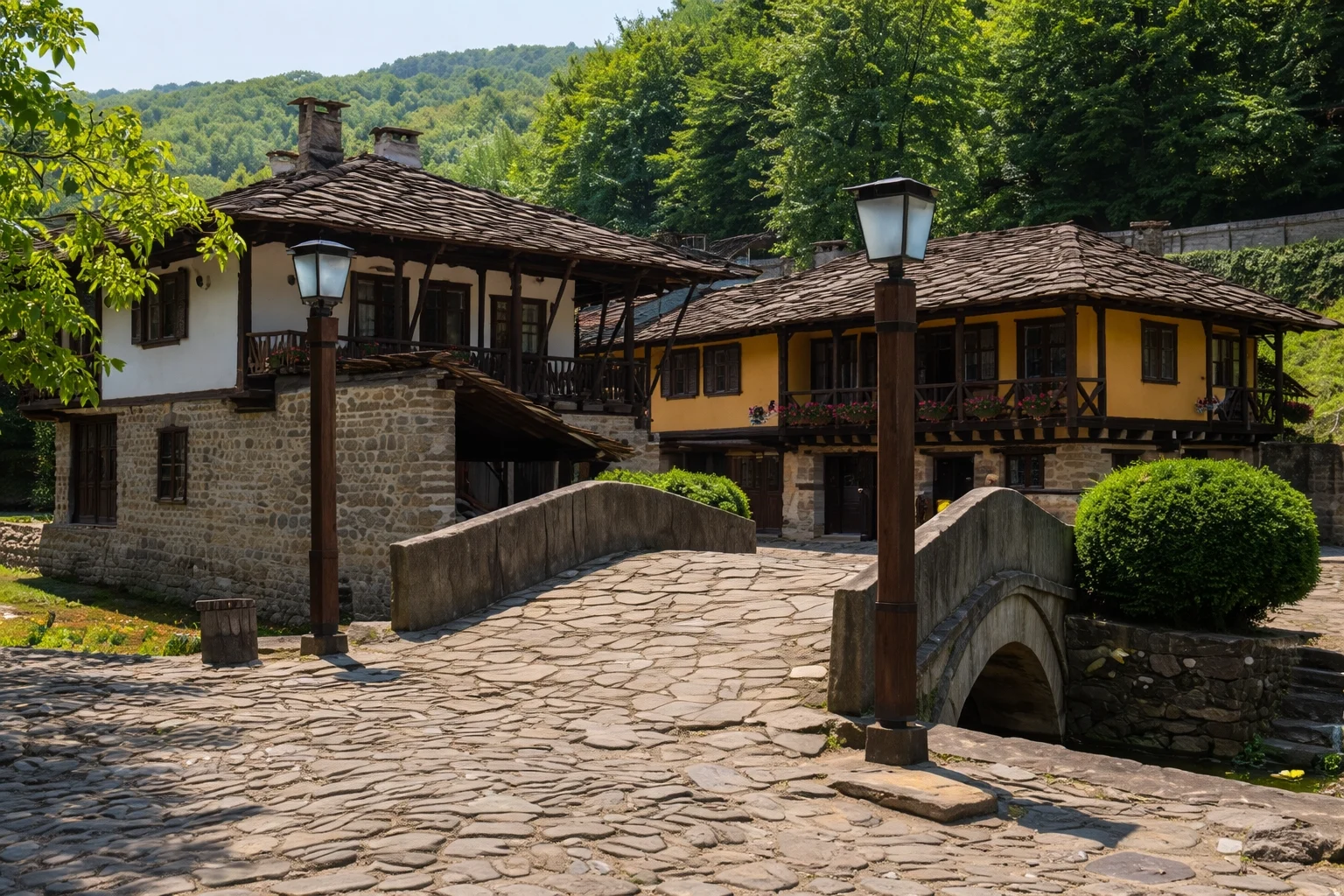
The museum officially opened in 1964. However, it recreates Bulgarian village life from the 18th and 19th centuries. As a result, visitors can discover how people lived, worked, and traded during the National Revival period.
Etar is famous for its traditional houses, cobbled streets, artisan workshops, and water-powered machines. In addition, skilled craftsmen demonstrate old trades such as woodcarving, pottery, weaving, icon painting, coppersmithing, and cutlery making. Many workshops still produce handmade goods using traditional methods.
One of the museum’s greatest attractions is its collection of working water-powered machines. Furthermore, visitors can watch historic mills, sawmills, and fulling mills in operation. Consequently, the museum offers a fascinating insight into traditional Bulgarian engineering.
Throughout the year, Etar hosts craft demonstrations, cultural festivals, educational activities, and seasonal events. Therefore, every visit offers something different. Meanwhile, families and children can enjoy interactive displays and live demonstrations.
Today, Etar Ethnographic Village remains one of Bulgaria’s leading cultural attractions. Moreover, it provides an excellent opportunity to experience authentic Bulgarian traditions in a beautiful natural setting.
Historical Importance:
Etar Ethnographic Village preserves one of Bulgaria’s finest collections of National Revival architecture. At that time, craftsmen and merchants played an important role in the country’s economy and cultural life.
The museum also protects traditional skills that have been passed down for generations. In addition, visitors can watch artisans using techniques that have changed very little over the centuries.
Many of the buildings were carefully relocated from villages across central Bulgaria. Consequently, Etar became one of the country’s most important centres for preserving architectural and cultural heritage.
Today, the museum continues to educate visitors about traditional Bulgarian life. At the same time, it supports local craftsmen and keeps many old skills alive. Therefore, Etar remains one of the country’s most valuable cultural landmarks.
What to See:
- Traditional Bulgarian Revival Houses
- Working Water-Powered Mills
- Artisan Workshops
- Pottery Demonstrations
- Woodcarving Workshops
- Traditional Weaving
- Cobbled Streets
- Handmade Souvenir Shops
Best Time to Visit:
Spring, summer, and early autumn are the best times to visit Etar Ethnographic Village. During these seasons, the weather is pleasant for exploring the outdoor museum.
In addition, many craft demonstrations and cultural events take place during the warmer months. Therefore, visitors can experience traditional Bulgarian life at its most vibrant.
What to Visit Nearby:
- Gabrovo Town Centre
- House of Humour and Satire
- Interactive Museum of Industry
- Sokolski Monastery
- Uzana
- Shipka Monument
- Buzludzha Monument
- Dryanovo Monastery
Quick Travel Information:
Etar Ethnographic Village is located about 8 kilometres south of Gabrovo in central Bulgaria. Visitors can easily reach the museum by car, taxi, or public bus from Gabrovo.
Furthermore, the museum offers parking, restaurants, cafés, souvenir shops, and visitor facilities. Therefore, many travellers spend several hours exploring the village before continuing to nearby attractions.
Useful Links:
- Google Maps – Etar Ethnographic Village
- Etar Ethnographic Village Official Website
- Gabrovo Weather Forecast
Related Tours including Etar Ethnographic Village – Near Gabrovo:
Day Tour to Bacho Kiro Cave & Etar Crafts Village – Lunch Included
Want to see this place?
We would love to help you explore Bulgaria! Whether you're travelling with friends, family, or colleagues, we offer both group tours and tailor-made trips designed around your interests. Let us create the perfect Bulgarian experience for you.