Pliska National Historical and Archaeological Reserve – Pliska, Bulgaria
Location: Pliska, Shumen Province, Northeastern Bulgaria
Type: Archaeological Reserve / First Bulgarian Capital / Cultural Heritage
Main Facts:
The Pliska National Historical and Archaeological Reserve is one of Bulgaria’s most important historical sites and the birthplace of the First Bulgarian Empire. Located in northeastern Bulgaria, Pliska served as the country’s first capital from 681 to 893 AD. Furthermore, it preserves the remains of one of medieval Europe’s largest fortified cities.
Founded by Khan Asparuh after the establishment of the Bulgarian state in 681 AD, Pliska quickly developed into the political, military, and cultural centre of the First Bulgarian Empire. As a result, massive defensive walls, royal palaces, temples, and public buildings were constructed within its enormous fortified area. At its height, the city covered more than 23 square kilometres, making it one of the largest settlements in Europe during the early Middle Ages.
The First Capital of Bulgaria
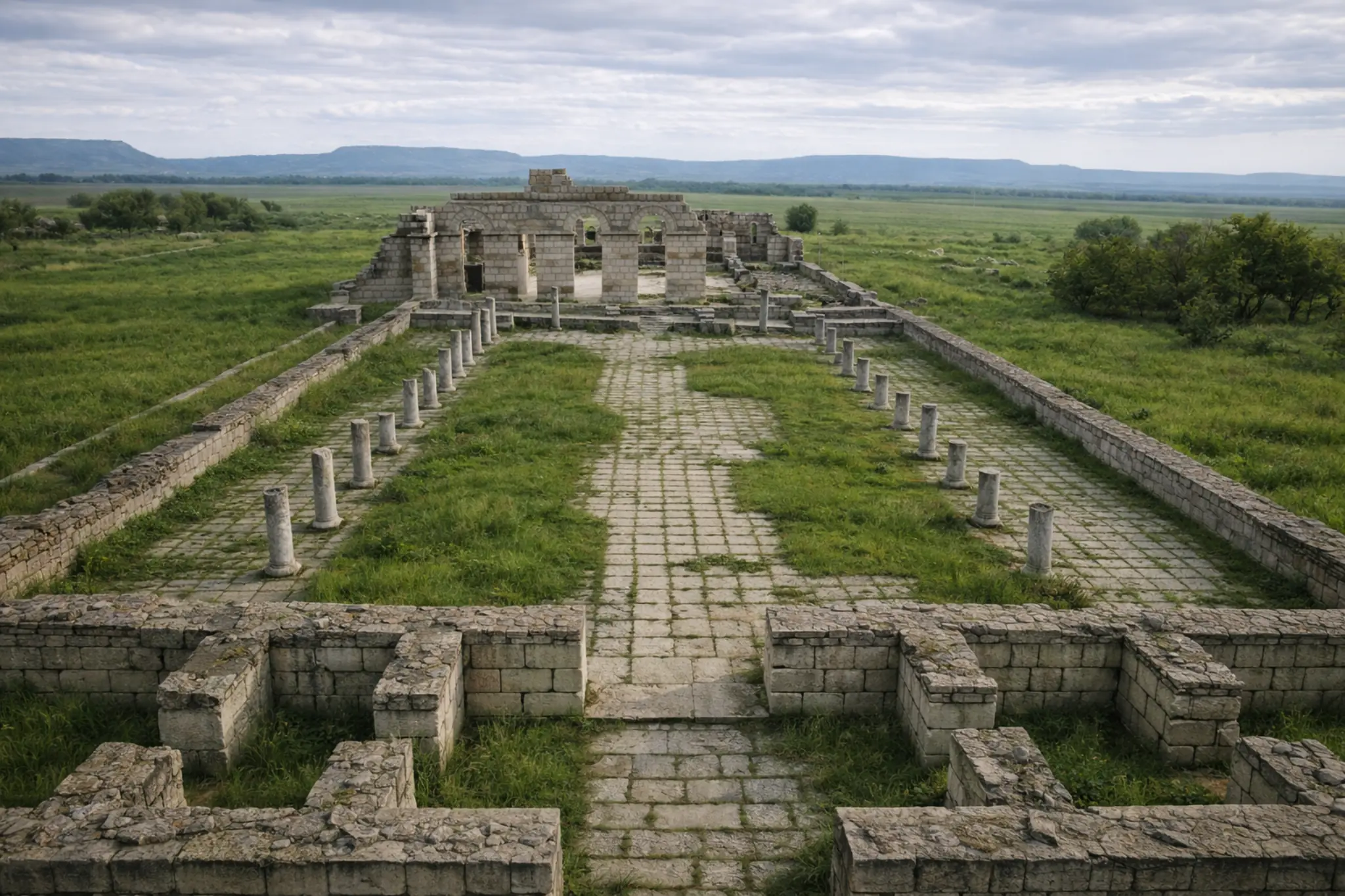
One of Pliska’s greatest landmarks is the Great Basilica, the largest Christian church in southeastern Europe during the ninth century. Built shortly after the Baptism of Bulgaria under Tsar Boris I, the basilica symbolised the country’s conversion to Christianity and its growing influence across the region. In addition, visitors can explore the remains of the royal palace, fortress walls, ceremonial gates, and ancient streets.
Meanwhile, the impressive stone fortifications, some reaching up to 12 metres in height, demonstrate the strength and importance of medieval Pliska. Consequently, the archaeological reserve offers visitors a remarkable journey through the origins of the Bulgarian state.
Whether you are interested in medieval history, archaeology, or Bulgarian heritage, Pliska National Historical and Archaeological Reserve is an essential destination.
Historical Importance:
Pliska holds a unique place in Bulgarian history as the country’s first capital. More importantly, it was from here that the First Bulgarian Empire expanded into one of Europe’s most powerful medieval states.
Furthermore, Pliska witnessed many of Bulgaria’s defining historical events, including the reigns of Khan Krum, Omurtag, and Tsar Boris I. As a result, the city became the centre of political power, military strategy, and religious transformation. In addition, the construction of the Great Basilica marked the beginning of Bulgaria’s Christian era and influenced the development of medieval Bulgarian culture.
Today, the archaeological reserve preserves these remarkable remains and continues to reveal new discoveries through ongoing archaeological research. Consequently, Pliska remains one of Bulgaria’s most significant cultural and historical landmarks.
What to See:
- Great Basilica of Pliska
- Royal Palace Complex
- Inner Fortress
- Massive Stone Fortress Walls
- Eastern Gate
- Archaeological Museum
- Ancient Streets
- Monument to Tsar Boris I
Best Time to Visit:
Pliska National Historical and Archaeological Reserve welcomes visitors throughout the year. However, spring and autumn offer the most comfortable weather for exploring the extensive archaeological site.
Furthermore, these seasons provide excellent conditions for walking and photography. In addition, the pleasant temperatures make it easier to explore the large fortress and surrounding monuments. During summer, visiting early in the morning or later in the afternoon is recommended. Meanwhile, winter offers a quieter atmosphere with fewer visitors.
What to Visit Nearby:
- Madara Rider (UNESCO)
- Shumen Fortress
- Tombul Mosque – Shumen
- Founders of the Bulgarian State Monument
- Preslav National Historical and Archaeological Reserve
- Abritus Archaeological Reserve
- Varna
- Srebarna Nature Reserve (UNESCO)
- Park of Space and Aviation in Omurtag
Quick Travel Information:
Pliska National Historical and Archaeological Reserve is located approximately 30 kilometres northeast of Shumen, around 150 kilometres east of Veliko Tarnovo, and about 70 kilometres west of Varna. Furthermore, the reserve is easily reached by car, with free parking available near the entrance. In addition, the archaeological site covers a large area, so comfortable walking shoes are recommended. Consequently, many visitors combine Pliska with nearby attractions such as the Madara Rider and the Preslav National Historical and Archaeological Reserve.
Useful Links:
Related Tours including Pliska National Historical and Archaeological Reserve: