Kilifarevski Monastery – Medieval Heritage Near Veliko Tarnovo
Location: Near Kilifarevo, Veliko Tarnovo Province, Bulgaria
Type: Orthodox Monastery / Medieval Heritage / Bulgarian Revival Architecture
Main Facts:
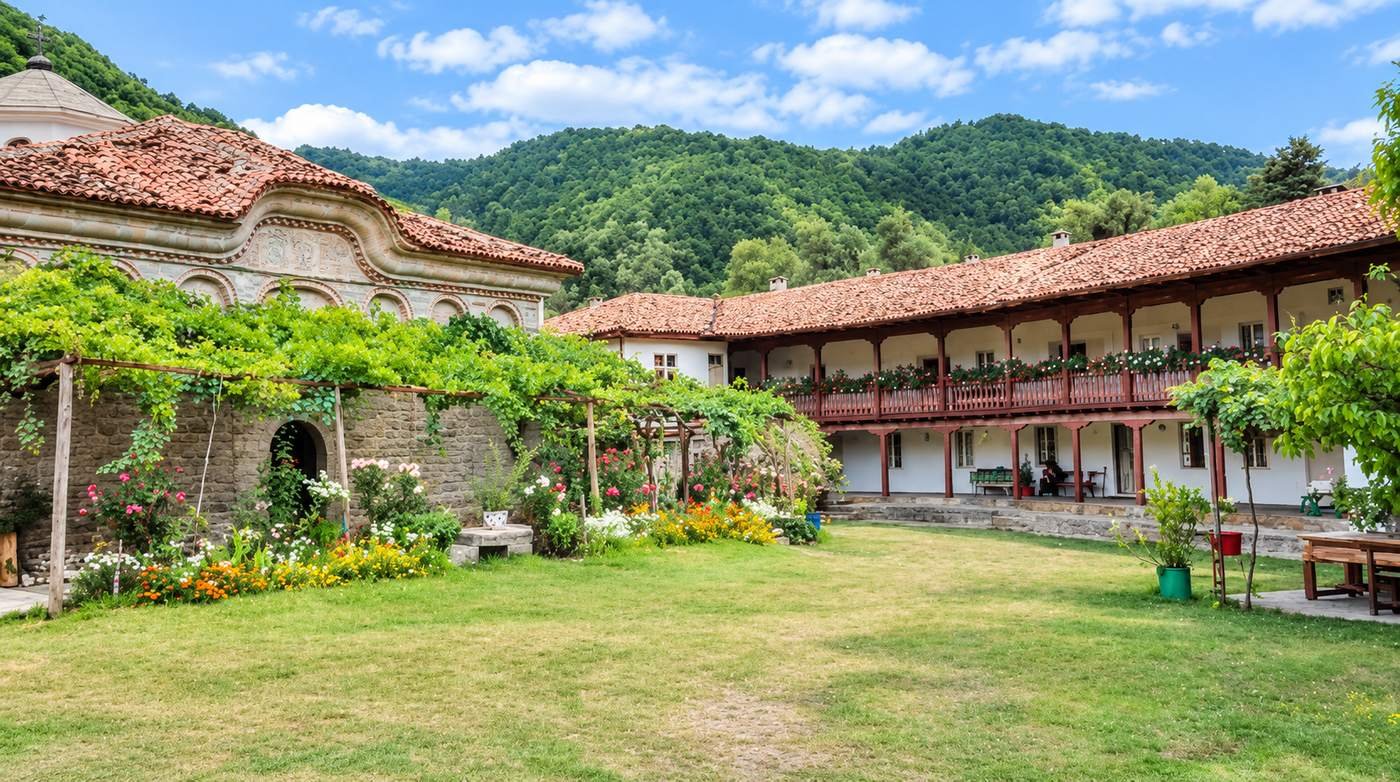
Kilifarevski Monastery is a historic Bulgarian Orthodox monastery on the banks of the Belitsa River, about 18 km south of Veliko Tarnovo.
The monastery has deep medieval connections. During the 14th century, the area became associated with St Theodosius of Tarnovo, one of the leading Bulgarian Hesychasts of the period.
The medieval monastery developed into an important spiritual and literary centre. Later, after destruction and rebuilding, a new monastery complex was established beside the river.
Much of the present architecture dates from the Bulgarian Revival. In particular, the main church was rebuilt in the 19th century by the famous master builder Kolyo Ficheto.
Today, Kilifarevski Monastery offers visitors a combination of religious heritage, historic architecture and a peaceful riverside setting.
History of Kilifarevski Monastery:
The monastery’s medieval history is closely connected with St Theodosius of Tarnovo. Around the middle of the 14th century, he settled in the forests near Kilifarevo and gathered a community of followers.
With the support of Tsar Ivan Alexander, a major monastic and literary centre developed in the area. The monastery became associated with Hesychasm, a spiritual movement within Eastern Orthodox Christianity.
It also became an important centre for books and education. Religious texts were written and translated here, while several influential Bulgarian churchmen and writers were connected with the monastery.
Among them was Evtimiy of Tarnovo, who later became Patriarch of Tarnovo. The monastery also played an important role in the development of the medieval Tarnovo literary tradition.
The fortified medieval monastery was eventually destroyed during the Ottoman conquest. It was rebuilt several times, while later attacks caused further damage.
During the Bulgarian Revival, the monastery entered a new period of development. Major rebuilding began in the 19th century, creating much of the complex that visitors can see today.
Architectural Importance:
Kilifarevski Monastery is particularly interesting because medieval remains are incorporated into a later Revival-period complex.
The main church was rebuilt in the 1840s by Kolyo Ficheto. Rather than simply removing the earlier structures, he incorporated surviving medieval elements into the new building.
The church has a broad three-nave interior and a distinctive low dome. Its exterior combines stone and brick decoration with carefully designed arches and ornamental details.
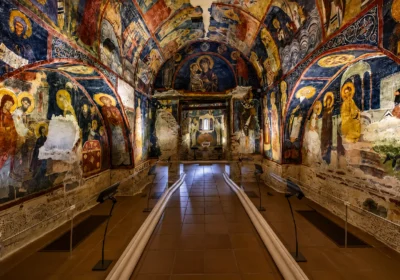
Inside, visitors can see an impressive iconostasis and valuable icons, including works by artists from the Tryavna school.
Another important feature is the Chapel of St Theodosius of Tarnovo. Parts of the older church complex survive behind the altar area, creating a direct connection between the medieval and Revival periods.
Historical Importance:
Kilifarevski Monastery was one of the important spiritual centres around medieval Tarnovo.
Its greatest historical significance comes from the literary and religious community that developed here during the 14th century. The monastery helped spread Hesychast ideas and supported the work of scholars, translators and religious writers.
The connection with Patriarch Evtimiy is particularly important. His early intellectual development was linked with the literary environment created around St Theodosius.
The monastery’s later history is also closely connected with Bulgarian Revival culture. Its 19th-century reconstruction brought together traditional religious architecture, local craftsmanship and the work of masters such as Kolyo Ficheto.
What to See:
- Church of St Demetrius
- Chapel of St Theodosius of Tarnovo
- Chapel of St John of Rila
- Kolyo Ficheto’s 19th-century architecture
- Historic iconostasis and icons
- Surviving medieval architectural elements
- Main monastery gate from the 19th century
- Historic monastic buildings
- Belitsa River and the surrounding countryside
Best Time to Visit:
Kilifarevski Monastery can be visited throughout the year.
Spring and autumn are especially pleasant because the surrounding countryside is ideal for walking and photography.
Summer mornings and late afternoons are also comfortable. During winter, check local conditions before travelling, particularly after heavy snow.
As the monastery is an active religious site, visitors should dress respectfully and keep noise to a minimum.
What to Visit Nearby:
- Kilifarevo Historical Museum
- Plakovski Monastery
- Kapinovski Monastery
- Veliko Tarnovo
- Preobrazhenski Monastery
- Hotnitsa Waterfall
Quick Travel Information:
Kilifarevski Monastery is about 18 km south of Veliko Tarnovo and around 4 km from the town of Kilifarevo.
By car, the journey from Veliko Tarnovo takes approximately 25 minutes. The monastery is open to visitors daily, generally from 07:00 to 19:00.
Allow around 45–60 minutes for a visit. Its convenient location also makes it easy to combine with Kilifarevo, Plakovski Monastery or other attractions south of Veliko Tarnovo.
Useful Links:
- Google Maps – Kilifarevski Monastery
- Official Website – Veliko Tarnovo Tourism
- Weather Forecast – Kilifarevo