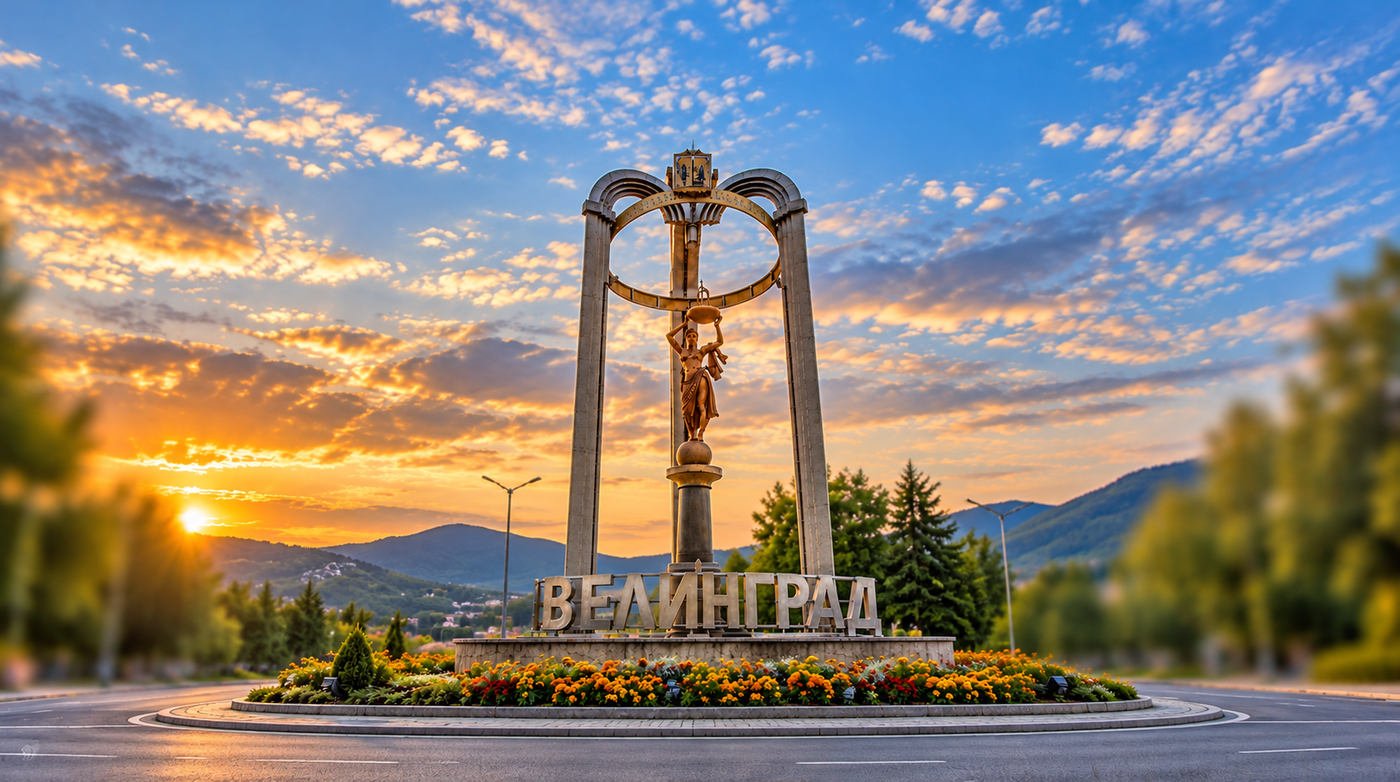
Velingrad, Bulgaria – Mineral Springs and Spa Heritage
Location: Velingrad, Pazardzhik Province, Bulgaria
Type: Spa Town / Mineral Springs / Mountain Tourism / Cultural Heritage
Main Facts:
Velingrad is one of Bulgaria’s best-known spa destinations, situated in the western Rhodope Mountains. Surrounded by pine forests and mountain scenery, the town attracts visitors looking for mineral pools, wellness treatments and outdoor activities.
Its greatest attraction is its exceptional abundance of mineral water. The Velingrad region has around 80 mineral springs, with a combined reported flow of approximately 170 litres per second. This natural resource has helped establish the town as one of Bulgaria’s leading balneology destinations.
Velingrad’s mineral waters vary considerably in temperature and composition. Some springs produce mildly mineralised water at around 48°C, while others reach temperatures above 80°C. The wider Velingrad area also includes particularly hot sources near Draginovo.
The town’s three main thermal zones are Chepino, Ladzhene and Kamenitsa. Each has its own mineral-water characteristics, historic bathing facilities and modern spa centres.
However, Velingrad offers much more than relaxation. Visitors can explore the famous Kleptuza karst spring, discover local history at the Historical Museum and enjoy walks through the surrounding forests.
The combination of thermal waters, natural landscapes and cultural attractions makes Velingrad an excellent destination throughout the year.
History of Velingrad:
People have lived in the Chepino Valley since ancient times. Archaeological discoveries provide evidence of prehistoric settlements and Thracian religious activity.
During the Middle Ages, the surrounding region became strategically important. Tsepina Fortress, near the village of Dorkovo, served as a major stronghold and later became the centre of the medieval ruler Despot Alexius Slav’s possessions in the Rhodopes.
The modern town developed from three separate settlements: Kamenitsa, Ladzhene and Chepino. In 1948, they joined together to form Velingrad.
The new town received its name in honour of Vela Peeva, a local woman who participated in the communist resistance during the Second World War.
Over time, the mineral springs became increasingly important to the local economy. Public baths, hotels and spa facilities helped transform Velingrad into one of Bulgaria’s leading thermal destinations.
The development of public bathing facilities began well before the town’s establishment. Historic mineral baths and outdoor pools helped make the Chepino Valley a popular resort during the early 20th century.
Velingrad’s Mineral Springs:
Mineral water is central to Velingrad’s identity. The town stands above one of Bulgaria’s most significant thermal-mineral deposits, with springs and boreholes distributed across several areas.
The waters have different temperatures and mineral compositions. Many are weakly mineralised and contain varying amounts of bicarbonate, sulphate, sodium, fluoride and silicic acid. These differences explain why the water from one thermal zone may feel and behave differently from that of another.
The three main thermal zones are Chepino, Ladzhene and Kamenitsa. The nearby Draginovo area also has very hot mineral water.
Chepino Mineral Springs
Chepino is the southernmost and largest of Velingrad’s three main thermal zones. Its mineral springs are concentrated in an area that historically contained several natural sources.
The water in this zone reaches around 48°C at the source. It is alkaline and relatively weakly mineralised, with bicarbonate, sulphate, sodium and fluoride among its main components.
The Chepino waters also contain silicic acid. Their particular composition distinguishes them from the waters found in other parts of Velingrad.
The zone is closely associated with Kleptuza Park and the surrounding green areas. However, it is important to distinguish the mineral springs from Kleptuza itself: Kleptuza is a cold karst spring, not a thermal mineral spring.
Ladzhene Mineral Springs
Ladzhene lies in the central part of Velingrad and has a long tradition of mineral bathing.
The water in this zone can reach approximately 60–61°C at the source. It is generally weakly mineralised and contains bicarbonate, sulphate, sodium and fluoride, together with silicic acid.
Ladzhene is closely connected with the town’s historic bathing culture. Here, traditional public baths developed alongside newer hotels and spa facilities.
Its central location makes it convenient for visitors who want to explore the town while enjoying mineral-water pools and wellness services.
Kamenitsa Mineral Springs
Kamenitsa is another major thermal zone and is known for its particularly hot mineral water.
Source temperatures can reach approximately 84–90°C, depending on the spring or borehole. The water is weakly mineralised to moderately mineralised compared with other local sources, with bicarbonate, sulphate, sodium and fluoride among its main components.
Because the water emerges at such high temperatures, it must be cooled or mixed appropriately before it can be used in bathing facilities.
Kamenitsa also has a long history of public bathing. Its thermal resources helped support the development of Velingrad as a spa resort during the 20th century.
Draginovo Mineral Springs
The wider Velingrad municipality also includes the Draginovo mineral-water deposit, where some sources reach approximately 96°C.
These waters are particularly hot and contain sulphate, sodium, bicarbonate, fluoride and silicic acid. Some sources also contain gases such as hydrogen sulphide.
Draginovo demonstrates the remarkable variety of thermal resources in the Velingrad region. However, it lies outside the central town and should be treated as a separate destination when planning a trip.
Mineral Composition and Spa Treatments
Velingrad’s mineral waters differ in temperature, acidity and mineral content. For this reason, not every spring is used for the same purpose.
Hotels and spa centres use mineral water in thermal pools, baths and organised wellness programmes. Some specialised facilities also offer rehabilitation and balneotherapy services under professional supervision.
Visitors who want a relaxing experience can enjoy many of the pools without booking a treatment. However, anyone seeking medical or therapeutic use of mineral water should follow professional medical advice.
Historic Mineral Baths and Outdoor Pools:
Velingrad’s mineral-water heritage is reflected in its historic bathing facilities.
Central Mineral Beach – Yosif Schniter
The Central Mineral Beach, named after Yosif Schniter, is an important part of the town’s spa history.
The facility opened in 1937 and became one of the landmarks of organised mineral-water recreation in Velingrad.
Outdoor mineral pools remain an appealing feature of the town. They allow visitors to enjoy warm water in an open-air setting, particularly during spring and summer.
Sulphur Bath
Velingrad’s historic Sulphur Bath is associated with the early development of the town’s spa facilities. Construction began in 1912, and the building entered operation around 1920–1921.
Its design was influenced by European spa architecture, reflecting the growing popularity of mineral-water resorts during that period.
The bath is an important reminder that Velingrad’s modern spa tradition developed well before the town was officially formed in 1948.
Mud Bath
The historic Mud Bath also played a role in the development of public balneotherapy in Velingrad.
Early bathing facilities used naturally occurring mineral water and mud, giving the bath its name. Over time, the town developed a wider range of bathing and rehabilitation services.
These historic buildings and facilities help explain why mineral water became such an important part of Velingrad’s local identity.
Kleptuza Karst Spring and Park:
Kleptuza is one of Velingrad’s most recognisable natural attractions. It is widely known as Bulgaria’s largest karst spring.
Located in the Chepino district, the spring supplies two picturesque artificial lakes surrounded by greenery. Water from the spring flows onwards towards the Chepinska River.
Unlike the town’s thermal mineral springs, Kleptuza produces cold groundwater. Nevertheless, it is an important part of Velingrad’s natural heritage and a popular place to relax.
The lakes and surrounding park provide a peaceful setting for walking, photography and relaxation. Visitors can also find restaurants and places to sit beside the water.
Kleptuza is particularly attractive during spring and summer, when the surrounding vegetation is lush. However, the park remains a pleasant place to visit throughout the year.
Walking trails begin in the area and lead towards the nearby hills and forests. Consequently, Kleptuza is an excellent starting point for exploring Velingrad’s natural surroundings.
Historical Museum of Velingrad:
The Historical Museum provides an introduction to the history, traditions and cultural heritage of the Chepino region.
Its collections cover archaeology, the Bulgarian Revival, ethnography and more recent history. Visitors can learn about traditional life in the Rhodopes and the people who shaped the region.
One of the museum’s most distinctive exhibitions focuses on painted Easter eggs. The collection presents the traditional wax-resist technique used to decorate eggs in the Chepino region, alongside examples from other parts of Bulgaria and Europe.
The museum also has exhibitions dedicated to Vela Peeva and the famous opera singer Nikolay Gyaurov, who was born in the area.
For visitors interested in local culture, the museum provides an excellent complement to Velingrad’s spa attractions.
Church of the Holy Trinity:
The Church of the Holy Trinity is one of the historic religious landmarks in the Kamenitsa district.
The church dates from 1816 and stands on the foundations of an earlier stone church. Its history reflects the religious life of the local Bulgarian Orthodox community during the Ottoman period.
The building is relatively modest compared with Bulgaria’s larger monasteries and churches. Nevertheless, it remains an important reminder of the area’s religious and architectural heritage.
Because the church is an active place of worship, visitors should dress respectfully and avoid disturbing services.
Tsepina Fortress:
Tsepina Fortress is one of the most interesting historical attractions near Velingrad.
The medieval fortress stands on a rocky hill near the village of Dorkovo, approximately 19 km east of the town.
During the Middle Ages, Tsepina became an important stronghold in the Rhodopes. It was closely associated with Despot Alexius Slav, who ruled much of the region during the early 13th century.
Today, visitors can see sections of the defensive walls and the remains of churches, water reservoirs and other structures. The elevated position also provides views across the surrounding mountains.
A visit to Tsepina offers a change of pace from Velingrad’s spa facilities and reveals another side of the region’s history.
Thracian Heritage Around Velingrad:
The mountains around Velingrad also contain traces of ancient Thracian religious activity.
One important site lies near Kleptuza, where archaeological research identified an Iron Age sanctuary. The location has been associated with the Bessi, a Thracian group connected with the Rhodope Mountains.
Another important religious site lies on Ostrets Peak, which overlooks the Chepino Valley. Archaeological discoveries suggest that the area had religious significance during antiquity.
These locations show that the region’s history extends well beyond the medieval period.
Some sites require a walk along marked trails, so visitors should check the route and conditions before setting out.
The Narrow-Gauge Railway:
Velingrad is also a stop on Bulgaria’s scenic Septemvri–Dobrinishte narrow-gauge railway.
The railway travels through mountain valleys, forests and small settlements, providing a memorable alternative to travelling entirely by car.
From Velingrad, passengers can continue towards Avramovo, Bansko and Dobrinishte, depending on the current timetable.
The line is particularly popular with railway enthusiasts and travellers who want to experience the Rhodopes at a slower pace.
Check the latest train schedule before planning your journey, as connections and departure times can change.
What to See:
• Chepino Mineral Springs
• Ladzhene Mineral Springs
• Kamenitsa Mineral Springs
• Central Mineral Beach – Yosif Schniter
• Historic Sulphur Bath
• Historic Mud Bath
• Kleptuza Karst Spring and Park
• Historical Museum of Velingrad
• Church of the Holy Trinity
• Tsepina Fortress near Dorkovo
• Thracian Sanctuary near Kleptuza
• Ostrets Peak and its archaeological remains
• Septemvri–Dobrinishte Narrow-Gauge Railway
• Pine forests and mountain walking trails
Best Time to Visit:
Velingrad is a year-round destination.
Spring and autumn are particularly pleasant for exploring Kleptuza, visiting museums and walking through the surrounding forests.
Summer is ideal for enjoying outdoor mineral pools, parks and mountain trails. During warmer days, early mornings and late afternoons are more comfortable for longer walks.
Winter is especially appealing for a spa break. Warm mineral pools offer a relaxing contrast to the colder mountain air, while nearby mountain resorts provide opportunities for winter activities.
For a combination of sightseeing and relaxation, late spring and early autumn are excellent choices.
What to Visit Nearby:
• Tsepina Fortress near Dorkovo
• Dorkovo Palaeontological Museum
• Batak
• Tsigov Chark and Batak Reservoir
• Pashino Bardo Thracian Sanctuary near Rakitovo
• Yundola mountain area
• Belmeken Reservoir
• Peshtera and Snezhanka Cave
• Pamporovo and the central Rhodopes
Quick Travel Information:
Velingrad is approximately 135 km from Sofia, around 1 hour and 45 minutes to 2 hours by car. From Veliko Tarnovo, the journey is roughly 250–280 km and usually takes about 4 hours, depending on the route.
Because of the longer drive from Veliko Tarnovo, Velingrad is better suited to an overnight stay or weekend trip than a typical day excursion. Visitors travelling from Sofia can also enjoy a day trip, although staying overnight allows more time for the spa facilities and nearby attractions.
Allow at least half a day to experience the town’s main sights, or longer if you plan to enjoy its mineral pools. Kleptuza, the Historical Museum and the town centre can be explored in a few hours.
For a wider regional itinerary, combine Velingrad with Tsepina Fortress and the nearby Dorkovo Palaeontological Museum.
Useful Links:
• Google Maps – Velingrad, Bulgaria
• Official Website – Velingrad Tourist Information Centre
• Official Website – Historical Museum of Velingrad
• Mineral Springs Information – Velingrad
• Weather Forecast – Velingrad