Plovdiv Old Town – Bulgaria’s Historic Heart
Location: Plovdiv, Bulgaria
Type: Historic Old Town / Cultural Heritage / Architectural District
Main Facts:
Plovdiv Old Town is one of the most atmospheric historic areas in Bulgaria. Built across the three hills of the ancient city, it combines Roman remains, Bulgarian Revival houses, churches, museums and cobbled streets.
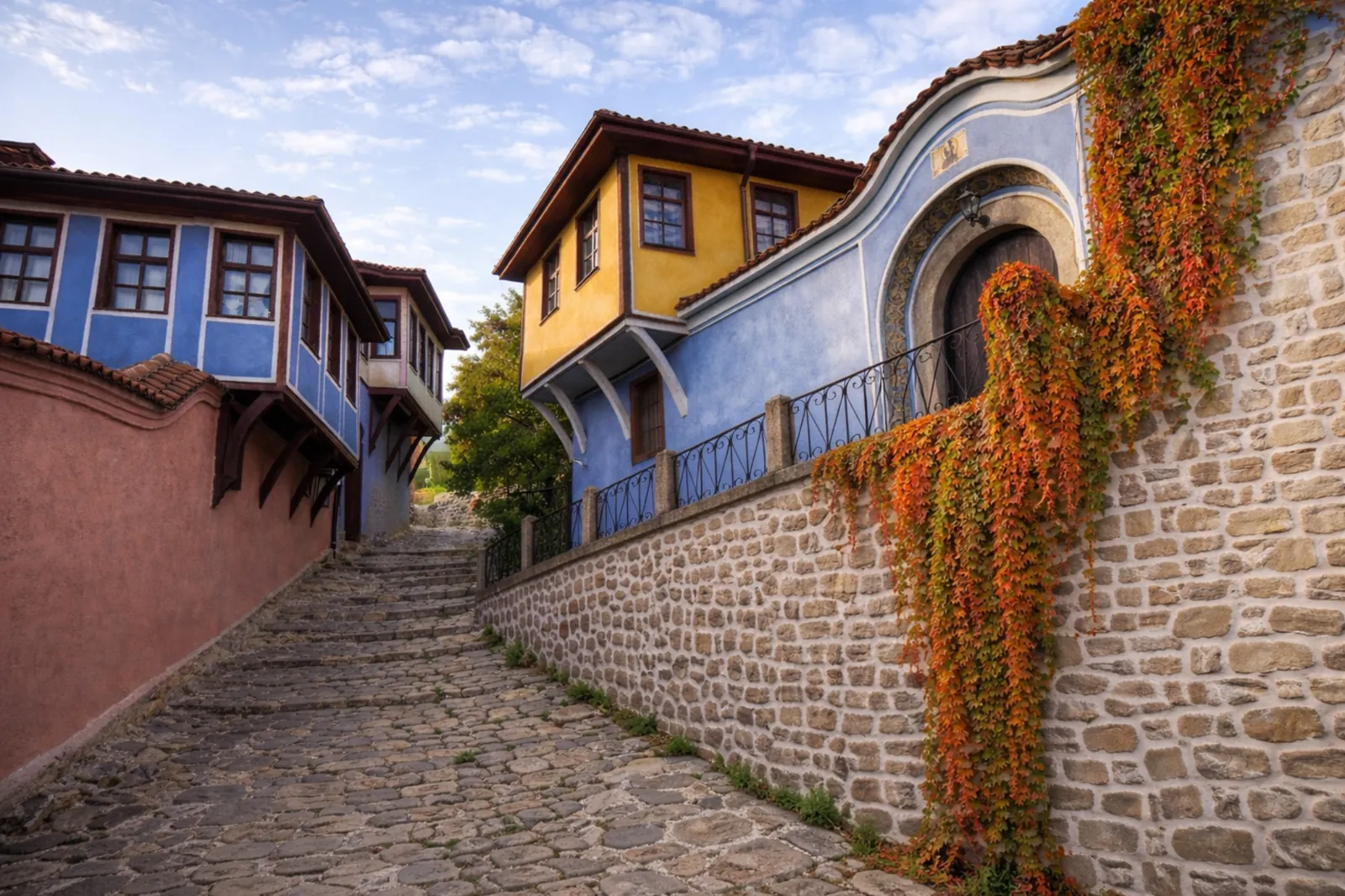
The area is especially famous for its 19th-century Revival architecture. Colourful houses with wooden details, enclosed balconies and richly decorated interiors line the narrow streets.
At the same time, Plovdiv Old Town preserves much older remains. Roman buildings, medieval walls and Ottoman-era landmarks show how the city developed through different periods.
Today, the Old Town is one of the main places to explore in Plovdiv. It is also home to some of the city’s most important attractions.
History of Plovdiv Old Town:
Plovdiv is one of Europe’s oldest continuously inhabited cities. Its history stretches back thousands of years, with settlements developing around the hills long before the Roman period.
The city became an important centre under Philip II of Macedon, who gave it the name Philippopolis. Later, the Romans developed the city into a major urban centre, leaving behind impressive public buildings and roads.
During the Middle Ages, Plovdiv changed hands several times between Bulgarian and Byzantine rulers. The Ottoman conquest brought another important period in the city’s history.
During the Bulgarian Revival, wealthy merchants and craftsmen built impressive houses across the hills. Many of these buildings survive today and give the Old Town its distinctive appearance.
After Bulgarian independence, the historic quarter continued to develop while preserving much of its traditional character. Consequently, it remains an important part of Plovdiv’s cultural identity.
Architectural Importance:
The Bulgarian Revival houses are the most recognisable feature of the Old Town.
Many have richly decorated façades, wooden verandas and large reception rooms. Inside, visitors can often see painted ceilings, carved woodwork and traditional furnishings.
However, the architecture is not limited to Revival houses. Roman remains, Ottoman buildings and churches stand alongside them, creating a remarkable mixture of architectural periods.
Because of this combination, walking through the Old Town feels like moving through different chapters of Plovdiv’s history.
Historical Importance:
Plovdiv Old Town is important because it preserves evidence of the city’s long and diverse past in a relatively compact area.
Roman, Byzantine, Bulgarian and Ottoman influences can all be seen within the historic district. In addition, the surviving Revival houses provide a clear picture of life in Plovdiv during the 19th century.
The area also played an important role in the cultural development of modern Bulgaria. Writers, artists, merchants and intellectuals were connected with many of the houses and institutions found here.
Today, the Old Town remains one of the best places to understand Plovdiv’s historical character.
What to See:
- Ancient Theatre of Philippopolis
- Hisar Kapia Medieval Gate
- Balabanov House
- Hindliyan House
- Nedkovich House
- Regional Ethnographic Museum – Plovdiv
- Church of St Constantine and Helena
- Roman remains and archaeological sites
- Cobbled historic streets and traditional Revival houses
- Nebet Tepe Ancient Settlement
Best Time to Visit:
Spring and autumn are ideal for exploring Plovdiv Old Town on foot. Temperatures are usually comfortable, while the streets are pleasant for longer walks.
Summer can be hot during the middle of the day. Therefore, early morning or late afternoon is a better time for walking.
The Old Town is also atmospheric in the evening. However, many museums and historic houses have shorter opening hours, so daytime is better for sightseeing inside the buildings.
Comfortable shoes are recommended because the streets are often steep and paved with cobblestones.
What to Visit Nearby:
- Ancient Roman Stadium
- Roman Forum of Philippopolis
- Bishop’s Basilica of Philippopolis
- Small Basilica of Philippopolis
- Kapana Creative District
- Regional Archaeological Museum – Plovdiv
- Dzhumaya Mosque
- Tsar Simeon’s Garden
- Singing Fountains
- Alyosha Monument
Quick Travel Information:
Plovdiv Old Town is in the centre of the city and is best explored on foot. Most major attractions are within a short walking distance of each other.
Plovdiv is approximately 210 km from Veliko Tarnovo, around 2 hours and 45 minutes by car. Therefore, the Old Town is well suited to a full-day trip from Veliko Tarnovo.
Allow at least 2–3 hours to explore the main streets and historic houses. However, a longer visit is worthwhile if you plan to enter several museums.
Parking directly inside the Old Town is limited, so it is usually easier to leave the car nearby and continue on foot.
Useful Links:
Related Tours including Plovdiv: