Rila Monastery – Bulgaria’s Famous UNESCO Site
Location: Rila Mountains, Southwestern Bulgaria
Type: Orthodox Monastery / UNESCO World Heritage Site / Historical Landmark
Main Facts:
Rila Monastery is the most famous monastery in Bulgaria. It is also one of the country’s most visited attractions. Nestled deep within the Rila Mountains, the monastery is surrounded by forests, rivers, and spectacular scenery. As a result, visitors travel here from around the world throughout the year.
The monastery was founded during the 10th century by Saint Ivan of Rila. He remains one of the most respected saints in Bulgarian history. Over time, the monastery became the spiritual heart of Bulgaria. Furthermore, it developed into an important centre for Orthodox Christianity, education, and culture.
Architecture and Artwork:
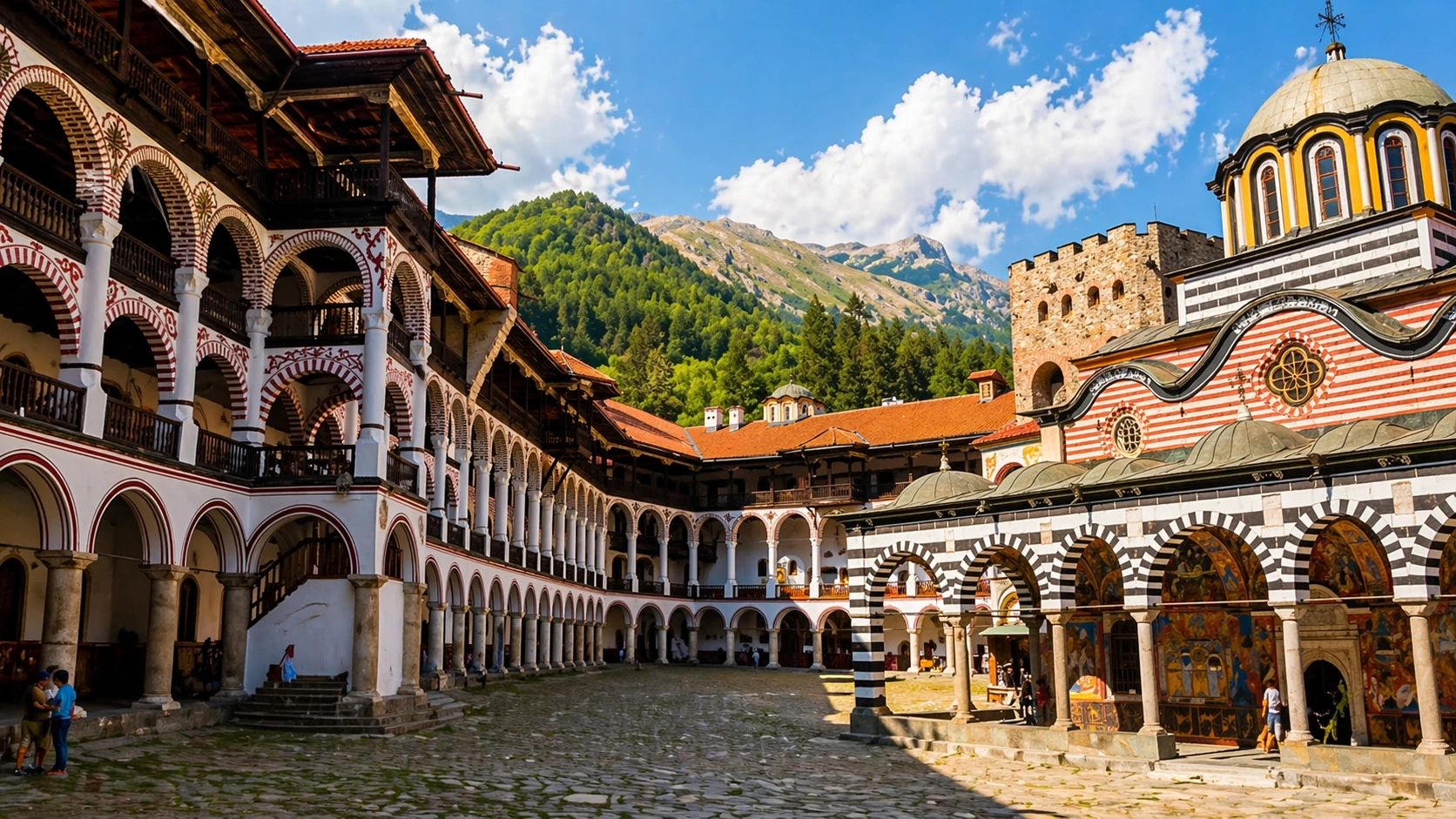
Today, visitors can admire the monastery’s impressive architecture and peaceful courtyards. In addition, the colourful frescoes and wooden balconies make the complex one of Bulgaria’s most beautiful landmarks.
The main church, known as the Nativity of the Virgin Church, stands at the centre of the complex. Inside, visitors can see stunning wall paintings, golden icons, and richly decorated interiors. Moreover, some of Bulgaria’s finest artists created these masterpieces.
Rila Monastery is also famous for its distinctive black-and-white striped arches. Furthermore, the large central courtyard creates a striking visual contrast against the surrounding mountains.
Museum and Cultural Heritage:
The monastery museum preserves valuable religious manuscripts, icons, and historical artefacts. As a result, visitors can learn more about Bulgaria’s spiritual and cultural history.
Because of its exceptional importance, UNESCO added Rila Monastery to the World Heritage List in 1983. Consequently, it became one of Bulgaria’s most recognised cultural landmarks.
Today, the monastery remains a powerful symbol of Bulgarian identity, faith, and national heritage.
Nature and Tourism:
The surrounding Rila Mountains offer excellent opportunities for outdoor activities. In addition, visitors can enjoy hiking, photography, and nature walks.
Many travellers combine a visit to the monastery with mountain adventures. Therefore, the area attracts both cultural tourists and nature lovers.
Historical Importance:
Rila Monastery played a major role in preserving Bulgarian culture and religion during centuries of Ottoman rule. During this period, monks protected Bulgarian language, literature, and Orthodox traditions.
Furthermore, the monastery became an important centre of learning. Monks copied manuscripts, educated students, and supported Bulgarian spiritual life. As a result, the monastery gained enormous cultural significance.
The complex suffered several fires and attacks over the centuries. However, Bulgarian craftsmen and artists rebuilt and restored it many times.
Most of the buildings visible today date from the 19th century. Moreover, they represent some of the finest examples of Bulgarian Revival architecture.
The monastery also became closely connected to Bulgarian national identity. In addition, it played an important role during the country’s cultural awakening.
Today, Rila Monastery remains an active Orthodox monastery. At the same time, it continues to attract pilgrims, historians, photographers, and travellers interested in Bulgarian history and architecture.
What to See:
- Nativity of the Virgin Church
- Colourful Orthodox Frescoes
- Monastery Courtyard
- Monastery Museum
- Saint Ivan of Rila’s Cave
- Wooden Monastic Balconies
- Hrelyo Tower
- Rila Mountain Scenery
Best Time to Visit:
Spring, summer, and early autumn are the best times to visit Rila Monastery Bulgaria. During these seasons, the weather is usually pleasant and suitable for outdoor activities.
In addition, clear conditions make sightseeing more enjoyable. Furthermore, visitors can comfortably explore the monastery grounds and surrounding mountain trails.
Spring brings fresh greenery and colourful landscapes. Meanwhile, summer offers longer days and excellent conditions for hiking in the Rila Mountains.
Early autumn is another excellent choice. As a result, visitors can enjoy mild temperatures, beautiful scenery, and fewer crowds.
Although the monastery welcomes visitors throughout the year, spring, summer, and early autumn generally provide the best experience for both sightseeing and nature tourism.
What to Visit Nearby:
- Sapareva Banya
- Seven Rila Lakes
- Rila Mountains
- Stob Earth Pyramids
- Kirilova Polyana
- Borovets
- Blagoevgrad
- Pirin National Park
Quick Travel Information:
Rila Monastery is located approximately 120 kilometres southwest of Sofia, nestled in the Rila Mountains at an altitude of 1,147 metres. Visitors can reach the monastery by car or organised tour, with the drive from Sofia taking around two hours, depending on traffic and road conditions.
The monastery is approximately 328 kilometres from Veliko Tarnovo, with a driving time of around 4 hours and 25 minutes. For visitors staying in Veliko Tarnovo, Rila Monastery can be included in a multi-day private tour of Bulgaria, allowing time to explore this remarkable UNESCO World Heritage Site alongside other historic destinations without rushing the journey.
Parking is available near the monastery, while accommodation, restaurants and souvenir shops can be found in the surrounding area. Some museum exhibitions and historical sections require separate admission tickets.
Visitors should dress respectfully because Rila Monastery remains an active Orthodox religious site. Shorts, short skirts and sleeveless tops are not permitted inside the complex. Comfortable footwear is recommended for exploring the courtyards and surrounding mountain scenery.
Useful Links: