Great Preslav – The Medieval Capital of Bulgaria
Location: Veliki Preslav, Shumen Province, Northeastern Bulgaria
Type: Medieval Capital / Archaeological Reserve / Cultural Heritage
Main Facts:
Great Preslav, also known as Veliki Preslav, was the second capital of the First Bulgarian Empire. Located in northeastern Bulgaria, the ancient city became an important centre of politics, religion, art, and literature during the reign of the Bulgarian rulers. Furthermore, its impressive ruins show how advanced Bulgarian culture had become during the early Middle Ages.
The city became the capital in 893, when Tsar Simeon I moved the royal court from Pliska. As a result, Preslav quickly grew into a magnificent medieval capital. Large palaces, churches, monasteries, and defensive walls were built across the city. Moreover, the rulers of the First Bulgarian Empire used Preslav as a major centre of government and diplomacy.
The Golden Age of Preslav
Preslav reached its peak during the reign of Tsar Simeon I, between 893 and 927. During this period, the city became one of the most important cultural centres in southeastern Europe. In addition, many writers, scholars, translators, and religious thinkers worked here.
The Preslav Literary School played a major role in the development of medieval Bulgarian literature. Consequently, the city became closely connected with the spread of Christian culture and the Bulgarian written language. Art also flourished, with beautiful glazed tiles, stone decorations, jewellery, and illustrated manuscripts produced in and around the capital.
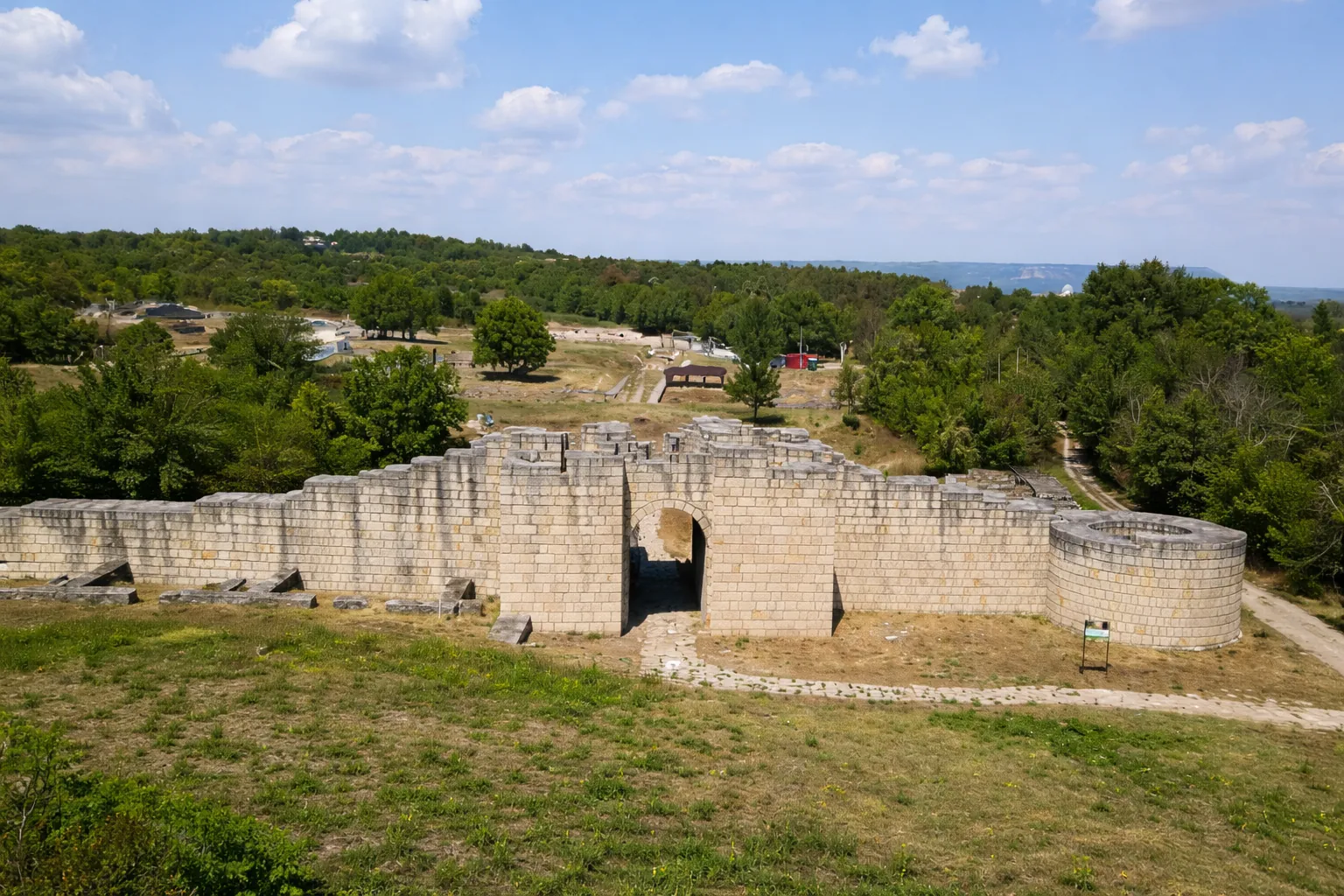
Today, visitors can explore the remains of the Inner City, including the Royal Palace, the Golden Church, fortress walls, gates, and religious buildings. Furthermore, the nearby museum displays many of the most important finds from the archaeological site.
Historical Importance:
Great Preslav was one of the most important cities of the First Bulgarian Empire. More importantly, it became the centre of a cultural movement that helped shape medieval Bulgarian identity.
After Tsar Simeon I moved the capital here in 893, Preslav grew into a grand royal city. At the same time, the city became an important centre of Christianity and education. The Preslav Literary School attracted scholars and translators who helped develop Bulgarian religious and literary traditions.
The city’s architecture also reflected its importance. For example, the Royal Palace and other major buildings used stone decoration, marble, ceramics, and colourful glazed tiles. As a result, Preslav developed an elegant style that became known as Preslav ceramic decoration.
However, the city’s prosperity did not last forever. In 971, Byzantine forces captured Preslav during the wars between the Bulgarian Empire and Byzantium. Later, Preslav lost its role as the main political centre of Bulgaria. Nevertheless, its cultural importance remains enormous.
Today, the archaeological reserve preserves the remains of this remarkable medieval capital. Therefore, a visit to Great Preslav offers a deeper understanding of the First Bulgarian Empire and its Golden Age.
What to See:
- Inner City of Preslav
- Royal Palace
- Golden Church
- Fortress Walls
- Medieval Gates
- Preslav Literary School Area
- Palace Complex
- Museum of Great Preslav
- Glazed Ceramic Decorations
- Medieval Stone Carvings
- Archaeological Finds and Jewellery
Best Time to Visit:
Great Preslav can be visited throughout the year. However, spring and autumn offer the most pleasant conditions for walking through the large archaeological reserve.
Furthermore, these seasons are ideal for combining Preslav with Pliska, Madara, or Shumen. During summer, an early morning or late afternoon visit is more comfortable because much of the archaeological area is outdoors. Meanwhile, winter offers a quieter experience and fewer visitors. Therefore, spring and autumn are usually the best choices for a full sightseeing day.
What to Visit Nearby:
- Pliska National Historical and Archaeological Reserve
- Great Basilica of Pliska
- Madara Rider (UNESCO)
- Shumen Fortress
- Monument to the Founders of the Bulgarian State
- Tombul Mosque
- Shumen
- Ovčarovo Thracian Tomb
- Park of Space and Aviation in Omurtag
Quick Travel Information:
Great Preslav is located near the modern town of Veliki Preslav, approximately 25 kilometres south of Shumen and around 135 kilometres from Varna. Furthermore, it is approximately 150 kilometres east of Veliko Tarnovo, so it is better suited to a longer day trip or a combined tour of northeastern Bulgaria.
The archaeological reserve is easiest to explore by car, as the site covers a large area. In addition, comfortable walking shoes are recommended because visitors move between ruins, walls, and open archaeological spaces. Consequently, Great Preslav works particularly well as part of a full-day route with Pliska, Madara, and Shumen.
Useful Links:
Related Tours including the Great Preslav: