Saint George Rotunda, Sofia, Bulgaria – Multi-Day Tour Stop
Location: Central Sofia, Bulgaria
Type: Ancient Church / Roman Heritage / Religious Monument / Archaeological Site
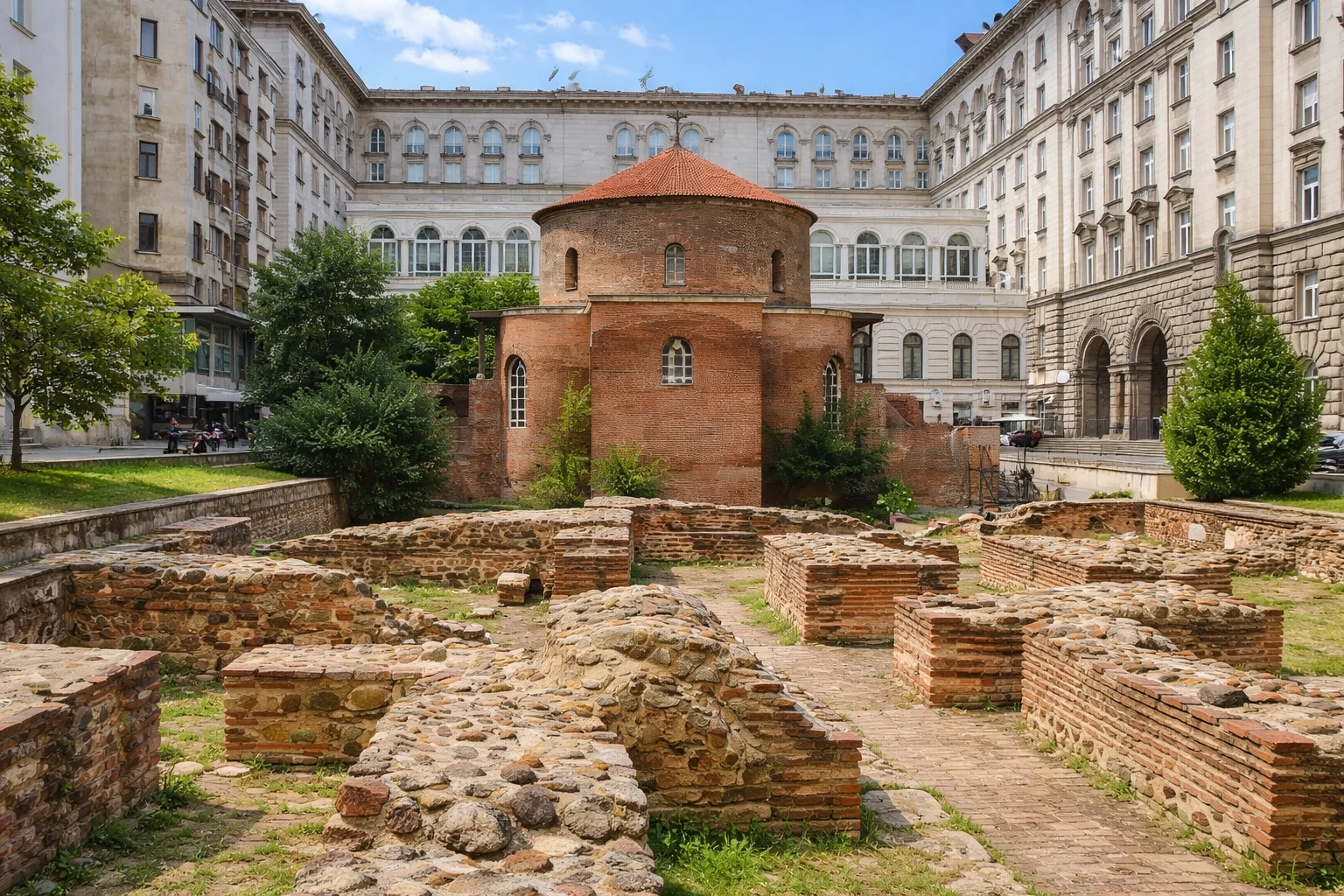
The Saint George Rotunda is one of the most remarkable historical landmarks in Sofia, Bulgaria, and is widely regarded as the oldest surviving building in the capital. Hidden within the courtyard of the Presidential Administration, this ancient red-brick church stands among the remains of Roman Serdica, offering a fascinating glimpse into the city’s early history. Dating to the beginning of the fourth century, the rotunda has survived Roman, Byzantine, medieval Bulgarian and Ottoman periods. Its distinctive architecture, historic frescoes and surrounding archaeological remains make it an interesting destination for anyone exploring Sofia. Thanks to its central location and relatively short visiting time, it is also an excellent historical stop to include in a multi-day trip through Bulgaria.
Main Facts:
The Saint George Rotunda, also known as the Church of Saint George the Victorious, is one of Sofia’s most important historical monuments. It is located at 2 Dondukov Boulevard, inside the courtyard of the Presidential Administration, close to Independence Square, the Largo and the Ancient Serdica Archaeological Complex.
The cylindrical brick building dates to the early fourth century AD, when Sofia was known as Serdica and the city was developing as an important Roman urban centre. It formed part of a larger complex of ancient buildings rather than standing alone. Its original purpose is not fully established, although it is thought to have served a public function before being used for Christian worship.
The rotunda is distinguished by its circular structure, domed roof, thick red-brick walls and small arched windows. Its relatively modest size contrasts with the imposing government buildings surrounding it, making the church a striking reminder of how ancient Sofia lies beneath the modern capital.
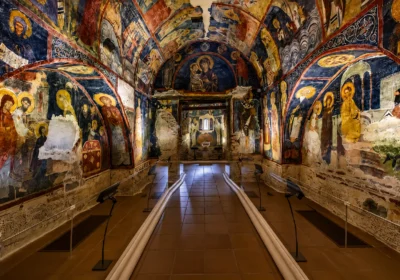
Inside, visitors can discover layers of medieval frescoes dating from different periods, including an exceptional image of an angel from the ninth or tenth century. The building was later converted into a mosque during Ottoman rule, and restoration work in the twentieth century helped reveal and preserve parts of its earlier Christian decoration.
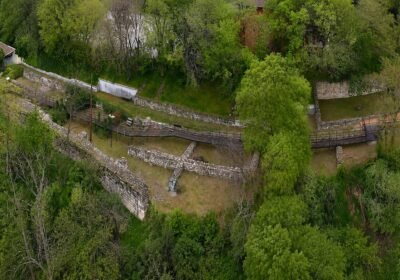
The surrounding archaeological complex contains remains of Roman streets, building foundations, drainage systems and a Roman underfloor heating system. These discoveries help explain how the ancient settlement developed around the church.
For travellers visiting Sofia as part of a wider Bulgarian holiday, the rotunda is a convenient attraction to add to a day of historical sightseeing. The visit can be combined with Ancient Serdica, Saint Sofia Church and other central landmarks without requiring a separate day in the itinerary.
Historical Importance:
The Roman Origins of the Rotunda
The history of the Saint George Rotunda begins during the Roman period, when Sofia was known as Serdica. The settlement occupied an important position along routes connecting different parts of the Balkans. Its location and nearby mineral springs helped it develop into a significant urban centre.
The rotunda dates to the beginning of the fourth century, during the reign of Emperor Constantine I the Great. At that time, Serdica was flourishing, and the area contained a substantial complex of public and other buildings.
The building’s original function remains uncertain. It may have initially served a public purpose before Christianity became established in the Roman Empire. During the early Christian period, it is generally believed to have functioned as a baptistery, a building used for baptisms.
Its survival is particularly remarkable because the surrounding urban landscape has changed repeatedly over the centuries. While many ancient structures disappeared or were incorporated into later buildings, the rotunda continued to be used and adapted, preserving its distinctive architectural form.
Today, it offers visitors a rare opportunity to see a building that connects modern Sofia directly with its Roman past.
From Baptistery to Christian Church
As Christianity spread throughout the Roman Empire, the rotunda acquired a religious role. It was transformed into a church during the sixth century, during the reign of Byzantine Emperor Justinian I.
The church became dedicated to Saint George, an early Christian martyr who became one of the most widely venerated saints in Eastern Christianity. Churches dedicated to him were established throughout the Byzantine world, and the Sofia rotunda became an important place of Christian worship.
The transformation also brought changes to the building’s interior. Wall paintings were introduced, and later generations added further decorative layers. These alterations reflect the changing artistic traditions and religious practices of the region.
During the medieval period, the church continued to serve the settlement known as Sredets, an earlier name for Sofia. Its continued use demonstrates the importance of religious buildings in preserving cultural and spiritual traditions through periods of political change.
The Medieval Frescoes
The frescoes of Saint George Rotunda are among its most valuable features. Painted over several centuries, they provide evidence of the development of religious art in medieval Bulgaria.
Several layers of paintings have been identified within the building. The earliest surviving medieval layer dates to the ninth or tenth century, while further paintings were added during later periods, including the twelfth and fifteenth centuries.
One of the best-known images is an angel with expressive human features, an important example of the artistic achievement of the period. Other surviving paintings reflect the religious imagery and decorative traditions associated with Orthodox Christian worship.
The different layers of frescoes reveal how the interior changed over time. Earlier paintings were sometimes covered by later decoration, and restoration work helped uncover parts of the historic artwork.
For visitors interested in art and religious history, these paintings are one of the principal reasons to visit the rotunda. They provide a glimpse into the artistic traditions that developed in the region long before Sofia became the modern Bulgarian capital.
The Ottoman Period and Restoration
During Ottoman rule, the Saint George Rotunda was converted into a mosque. The Christian frescoes were covered with plaster, and the building was adapted to its new religious function.
This transformation reflects the political and cultural changes that shaped Sofia following the Ottoman conquest. Like other historic religious buildings in the region, the rotunda was modified to serve the needs of a different period.
After Bulgaria’s liberation in 1878, the building underwent further changes. Restoration work began in the early twentieth century, helping preserve its architectural structure and uncover surviving layers of Christian paintings.
Today, the rotunda serves as an Orthodox Christian church and remains one of Sofia’s most important cultural monuments. Its survival through Roman, Byzantine, medieval Bulgarian and Ottoman periods makes it a particularly valuable part of the capital’s heritage.
The Rotunda and Saint Ivan of Rila
The history of the Saint George Rotunda is also connected with Saint Ivan of Rila, commonly known in English as Saint John of Rila, the patron saint of Bulgaria and founder of Rila Monastery.
According to historical accounts, his holy remains were kept in the rotunda for approximately a week in 1469 while being transported from Tarnovo to Rila Monastery.
This episode illustrates the importance of Sofia’s religious institutions during the medieval and Ottoman periods. The church served not only as a place of worship but also as part of a wider network of religious sites associated with important figures and traditions of the Bulgarian Orthodox Church.
For visitors exploring Bulgaria’s religious heritage, this connection provides another reason to appreciate the rotunda’s historical importance. It also links the church with Rila Monastery, one of the country’s most celebrated cultural and spiritual destinations.
What to See:
The Ancient Red-Brick Architecture
The first thing visitors notice about the Saint George Rotunda is its distinctive circular structure and reddish-brown brickwork. The building rises from a square foundation, with a cylindrical central section and a dome reaching approximately 13.7 metres above ground level.
Its architectural design is relatively simple but elegant. Small arched windows allow natural light into the interior, while the thick brick walls reflect the construction techniques used during Late Antiquity.
The contrast between the ancient church and the surrounding government buildings makes the rotunda one of the most unusual architectural sights in central Sofia. Its compact appearance can be surprising to visitors who expect a monumental church, but its age and architectural form give it exceptional historical value.
Take time to look at the exterior from different angles and observe how the building sits within the archaeological courtyard. It provides a fascinating contrast with the much larger Alexander Nevsky Cathedral elsewhere in the city.
The Medieval Frescoes Inside the Church
The interior is one of the main highlights of a visit. Despite the building’s modest dimensions, the surviving frescoes reveal centuries of religious and artistic history.
Look for the different layers of wall paintings, which represent several periods of decoration. The image of an angel from the ninth or tenth century is particularly notable for its expressive style and historical significance.
Other surviving paintings reflect the development of Orthodox Christian art and the changing decoration of the building throughout the Middle Ages. Their preservation allows visitors to appreciate the importance of this small church within Sofia’s religious heritage.
The interior is relatively intimate compared with the city’s larger churches, making the experience particularly rewarding for visitors interested in historic art and architecture.
Saint George Rotunda remains an active Orthodox church, so visitors should be respectful during services and follow any instructions regarding photography or access.
The Archaeological Remains Around the Rotunda
The church forms part of a larger archaeological complex that reveals important features of Roman Serdica. The surrounding area contains remains of ancient streets, buildings and infrastructure dating from the late third and early fourth centuries.
Behind the church’s apse are sections of a former Roman street with preserved drainage features. Archaeologists have also uncovered foundations of a large three-nave building, probably a public structure, and several smaller buildings.
These remains help visitors understand that the rotunda originally stood within a developed urban district. The church was part of a much larger architectural setting rather than an isolated building.
The archaeological area is particularly interesting because it survives in the centre of modern Sofia, surrounded by contemporary administrative buildings. It provides a vivid illustration of how the ancient city lies beneath the modern capital.
The Roman Underfloor Heating System
One of the more unusual discoveries in the archaeological area is a Roman underfloor heating system known as a hypocaust.
This system heated rooms by circulating warm air beneath raised floors. Small brick or tile pillars supported the floor, leaving a space through which heated air could move before escaping through channels in the walls.
The surviving floor supports provide evidence of the engineering techniques used by the Romans to make buildings more comfortable. Such systems were especially important in public buildings and residences designed for use throughout the year.
The discovery also shows that Roman Serdica had sophisticated infrastructure, extending beyond its streets and defensive structures. For visitors interested in ancient technology and everyday life, the remains offer an additional detail to look for while exploring the courtyard.
The Former Roman Street and Building Foundations
The archaeological courtyard contains further remains of the street network that once served Roman Serdica. Sections of ancient paving and drainage systems reveal how people moved through the settlement and how its different areas were connected.
The foundations of a large building and several smaller structures indicate that this part of the city contained a mixture of public and other buildings. Although many walls survive only at foundation level, their arrangement helps illustrate the scale and organisation of the ancient district.
These remains provide a useful introduction to the wider Ancient Serdica Archaeological Complex nearby. Visitors interested in Roman history can continue their exploration by walking towards the Largo, where additional streets and building foundations are preserved.
The combination of the rotunda and its surroundings makes the visit more rewarding than simply viewing the church from outside. It offers a compact introduction to several centuries of Sofia’s urban history.
Best Time to Visit:
Saint George Rotunda can be visited throughout the year, making it a convenient attraction in every season.
Spring (April–June) is an excellent time to explore central Sofia. Temperatures are generally comfortable for walking, and the rotunda can easily be combined with nearby churches, museums and historic streets.
Summer (July–August) offers long daylight hours and favourable conditions for exploring the surrounding archaeological sites. However, central Sofia can become busy during peak travel periods, so an earlier visit may provide a quieter experience.
Autumn (September–October) is another pleasant time to discover the rotunda and nearby landmarks. The weather is often suitable for walking between attractions, museums and city squares.
Winter (November–March) is also suitable for visiting because the rotunda is centrally located and can be combined with indoor museums and other cultural attractions. Cold or wet weather may make spending time around the outdoor archaeological remains less comfortable.
As the rotunda remains an active place of worship, access to the interior may be affected by services or religious events. Visitors should respect any notices or instructions displayed at the church.
What to Visit Nearby:
Saint George Rotunda is in the heart of Sofia, within walking distance of several important historical and cultural attractions.
- Ancient Serdica Ruins: Explore the remains of Roman streets, residential buildings and fortifications beneath the modern city centre.
- Saint Sofia Church: Discover one of the capital’s oldest Christian basilicas, known for its red-brick architecture and archaeological necropolis.
- Alexander Nevsky Cathedral: Visit Sofia’s most recognisable cathedral, famous for its golden domes and richly decorated interior.
- National Archaeological Institute with Museum: Discover archaeological finds from across Bulgaria, including artefacts from Thracian, Greek, Roman and medieval periods.
- National Assembly of Bulgaria: See the historic parliament building and nearby monuments associated with Bulgarian history.
- Banya Bashi Mosque: Admire a historic Ottoman-era mosque near the city’s mineral springs.
- Central Mineral Baths: See the impressive historic building that houses the Regional History Museum of Sofia.
- Saint Nedelya Church: Visit another important Orthodox church in the centre of the capital.
- Independence Square and the Largo: Explore the central government district, where modern architecture stands alongside exposed remains of ancient Serdica.
Quick Travel Information:
Location: Saint George Rotunda is at 2 Dondukov Boulevard, inside the courtyard of the Presidential Administration in central Sofia.
Ideal for a multi-day Bulgaria trip: The rotunda is an excellent short stop when travelling through Sofia as part of a broader Bulgarian holiday. Its central location makes it easy to incorporate into a day of sightseeing without needing to allocate an entire day to the attraction.
Recommended visit duration: Allow approximately 30–45 minutes to see the rotunda and its immediate archaeological surroundings. If you also plan to visit Ancient Serdica Ruins, Saint Sofia Church and Alexander Nevsky Cathedral, allow around half a day for sightseeing in central Sofia.
Getting there: The rotunda is within walking distance of Serdika metro station and many central attractions. The metro connects the city centre with other parts of Sofia, while the historic district is easy to explore on foot.
Combining nearby attractions: Travellers with limited time can visit the rotunda alongside Ancient Serdica Ruins, Saint Nedelya Church and the Central Mineral Baths. Saint Sofia Church and Alexander Nevsky Cathedral can be added to a longer visit.
Admission: Bulgaria’s Ministry of Tourism lists the rotunda as free to visit throughout the year. As it is an active church, access arrangements for the interior may vary during services or special events.
Accessibility: The surrounding courtyard includes uneven surfaces and archaeological remains. Visitors with reduced mobility should take care when moving through the area.
Useful Links:
- Saint George Rotunda – Bulgarian Ministry of Tourism
- Saint George Rotunda – Discover Sofia Official Tourism Website
- Archaeological Remains Around Saint George Rotunda – Sofia History Museum
- Sofia History Museum – Official Website
- Visit Sofia – Official Tourism Website
Related Tours including Sofia: